

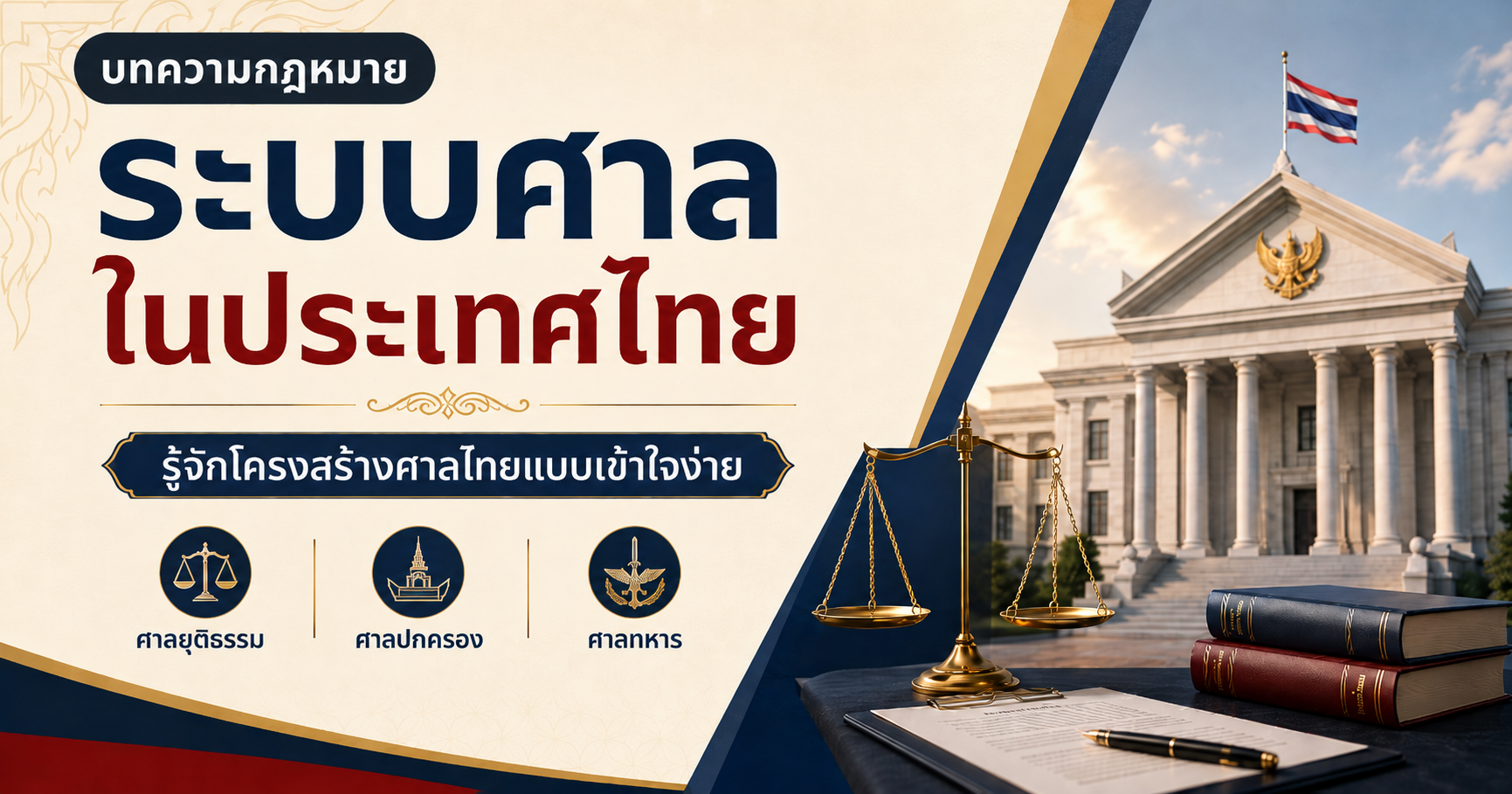
⚖️ How Many Types of Courts Are There in Thailand?
Thailand’s court system is an important mechanism for administering justice, protecting the rights of the people, and reviewing the exercise of legal authority. Under the Constitution of the Kingdom of Thailand, there are four main types of courts: the Courts of Justice, the Administrative Courts, the Constitutional Court, and the Military Courts. Each court has different powers and duties depending on the nature of the case.
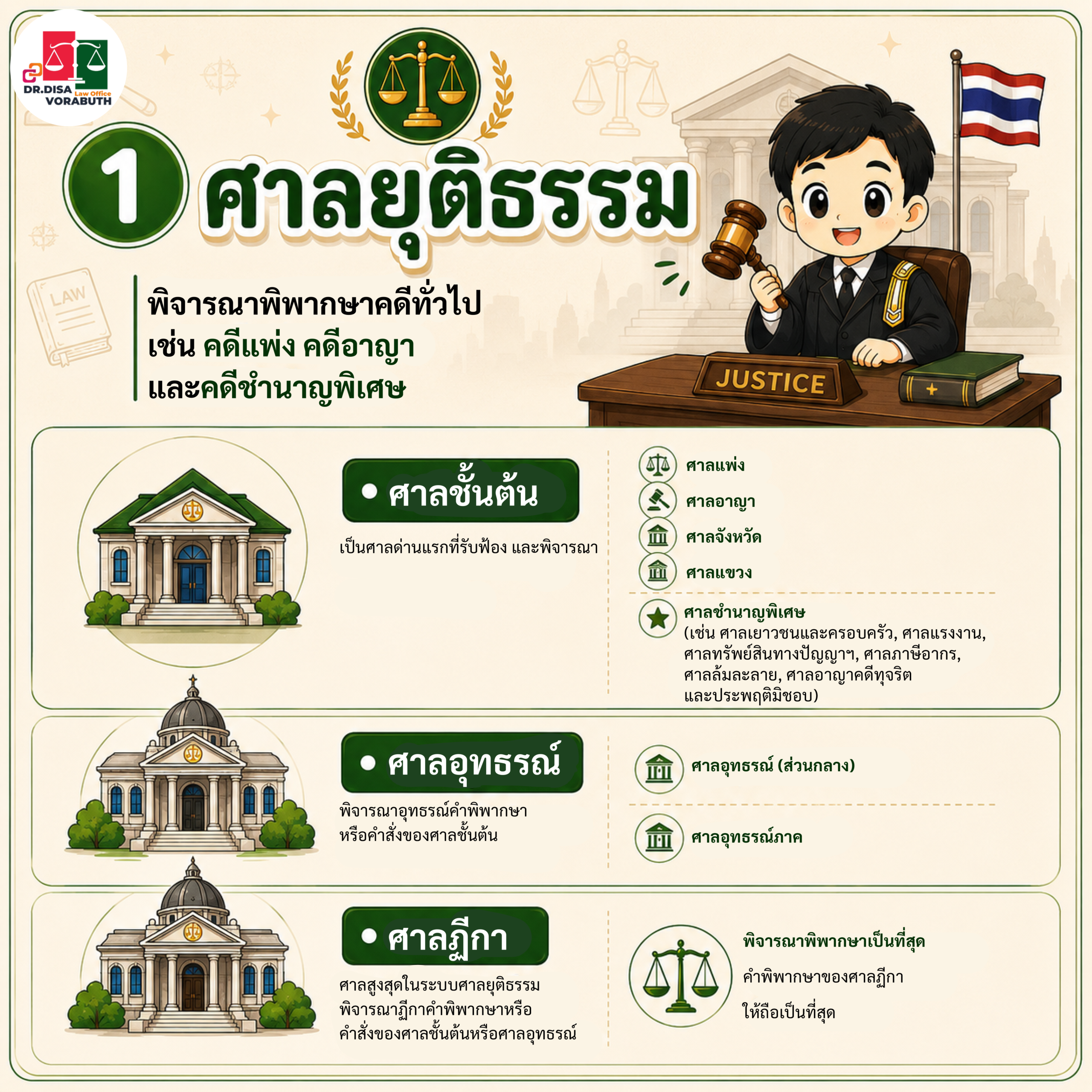
1. Courts of Justice
The Courts of Justice are the courts most familiar to the general public. They have the power to hear and adjudicate general cases, including civil cases, criminal cases, and specialized cases, except for cases that the law specifically places under the jurisdiction of other courts.
Examples of cases under the jurisdiction of the Courts of Justice
Civil cases include breach of contract, debts, wrongful acts, claims for damages, inheritance, family matters, divorce, child custody, and division of marital property.
Criminal cases include theft, fraud, embezzlement, assault, defamation, and other offenses under criminal law.
Specialized cases include labor cases, tax cases, intellectual property and international trade cases, bankruptcy cases, and juvenile and family cases.
Levels of the Courts of Justice
The Courts of Justice are divided into three levels: the Courts of First Instance, the Courts of Appeal, and the Supreme Court.
The Courts of First Instance are the courts where cases are first heard. They receive complaints, conduct hearings, examine evidence and witnesses, and issue initial judgments.
The Courts of Appeal review cases when a party disagrees with the judgment of the Court of First Instance and files an appeal in accordance with the conditions prescribed by law.
The Supreme Court is the highest court in the Court of Justice system. It considers cases brought before it by appeal on points permitted by law. Supreme Court judgments often serve as important guidelines for legal interpretation.
2. Administrative Courts
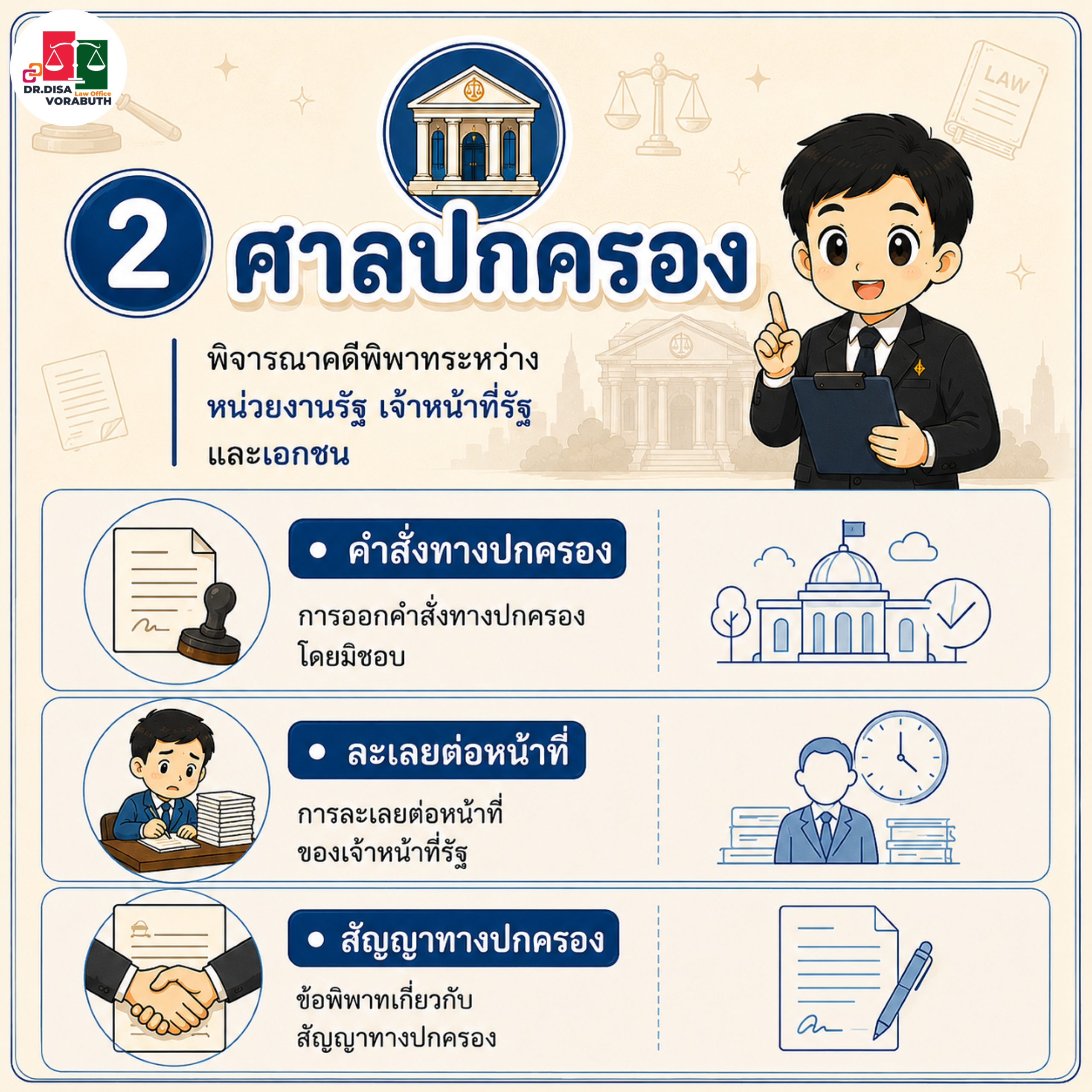
The Administrative Courts hear and adjudicate administrative disputes. In general, these are disputes between individuals or private entities and government agencies or state officials, arising from the exercise of administrative power.
Examples of cases under the jurisdiction of the Administrative Courts
Cases concerning administrative orders include orders revoking licenses, orders refusing approval, disciplinary orders, or orders issued by government agencies that affect an individual’s rights.
Cases concerning neglect of duty include situations where a government agency fails to perform its legal duties or delays performing those duties without reasonable justification.
Cases concerning administrative contracts include concession agreements, contracts for the provision of public services, or contracts that are connected with the performance of state functions.
Cases concerning wrongful acts by government agencies or state officials include acts committed through the exercise of legal authority.
Key Characteristics of the Administrative Courts
The Administrative Courts do not hear ordinary civil or criminal cases. Instead, they focus on reviewing the legality of administrative acts to ensure that the exercise of state power is lawful, fair, and does not excessively affect the rights of the people.
3. Constitutional Court
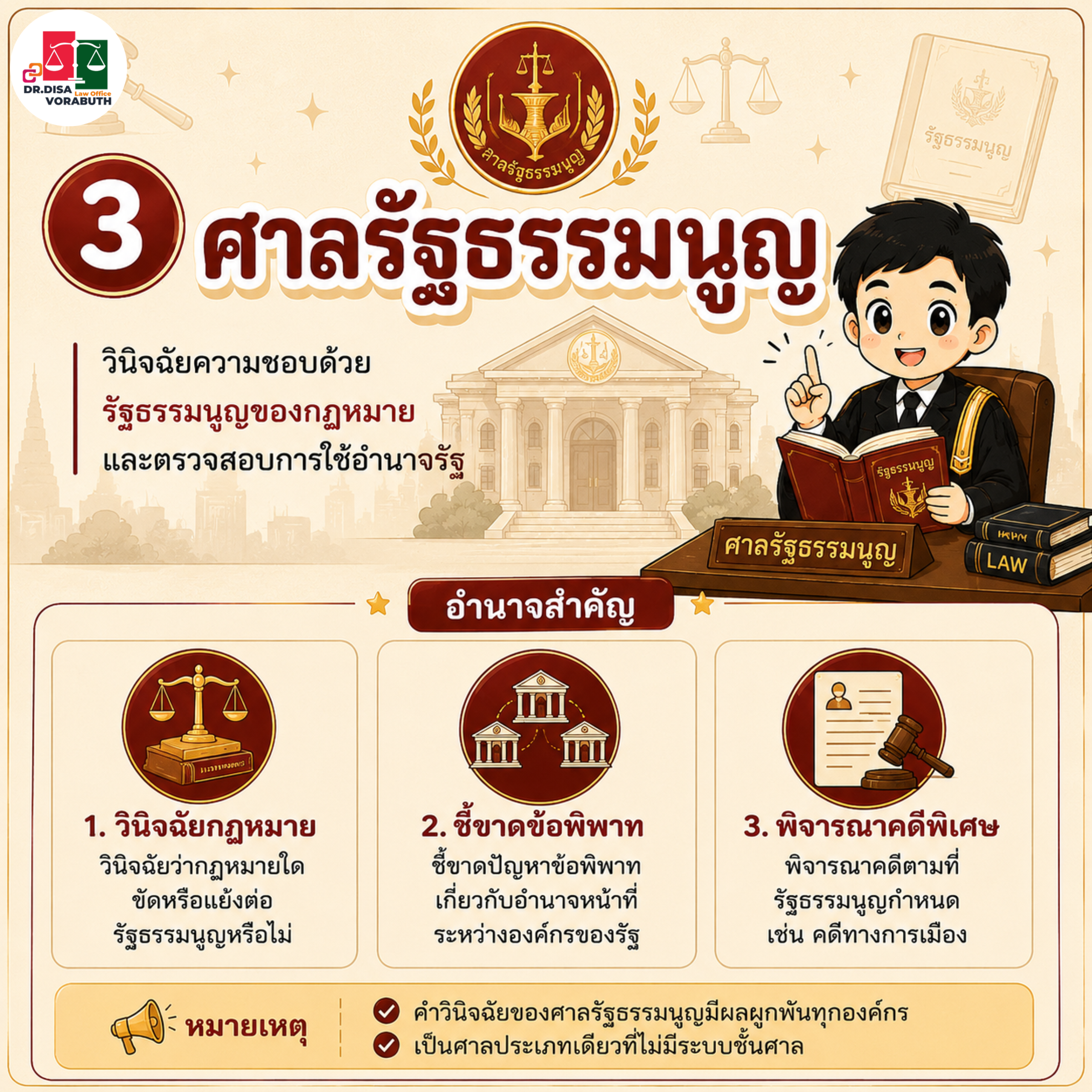
The Constitutional Court has the duty to decide issues relating to the Constitution, which is the supreme law of the country. The Constitutional Court does not hear ordinary cases like the Courts of Justice. Instead, it considers specific issues concerning constitutionality.
Examples of matters considered by the Constitutional Court
Deciding whether any law is contrary to or inconsistent with the Constitution.
Deciding on the qualifications or prohibited characteristics of persons holding political positions.
Deciding matters concerning the duties and powers of constitutional organizations.
Reviewing the exercise of state power in matters related to the Constitution.
Effect of Constitutional Court Rulings
Rulings of the Constitutional Court are highly significant because they involve the interpretation of the supreme law of the country. As a general principle, such rulings are binding on the relevant organizations and may affect the enforcement of laws or the operations of government agencies.
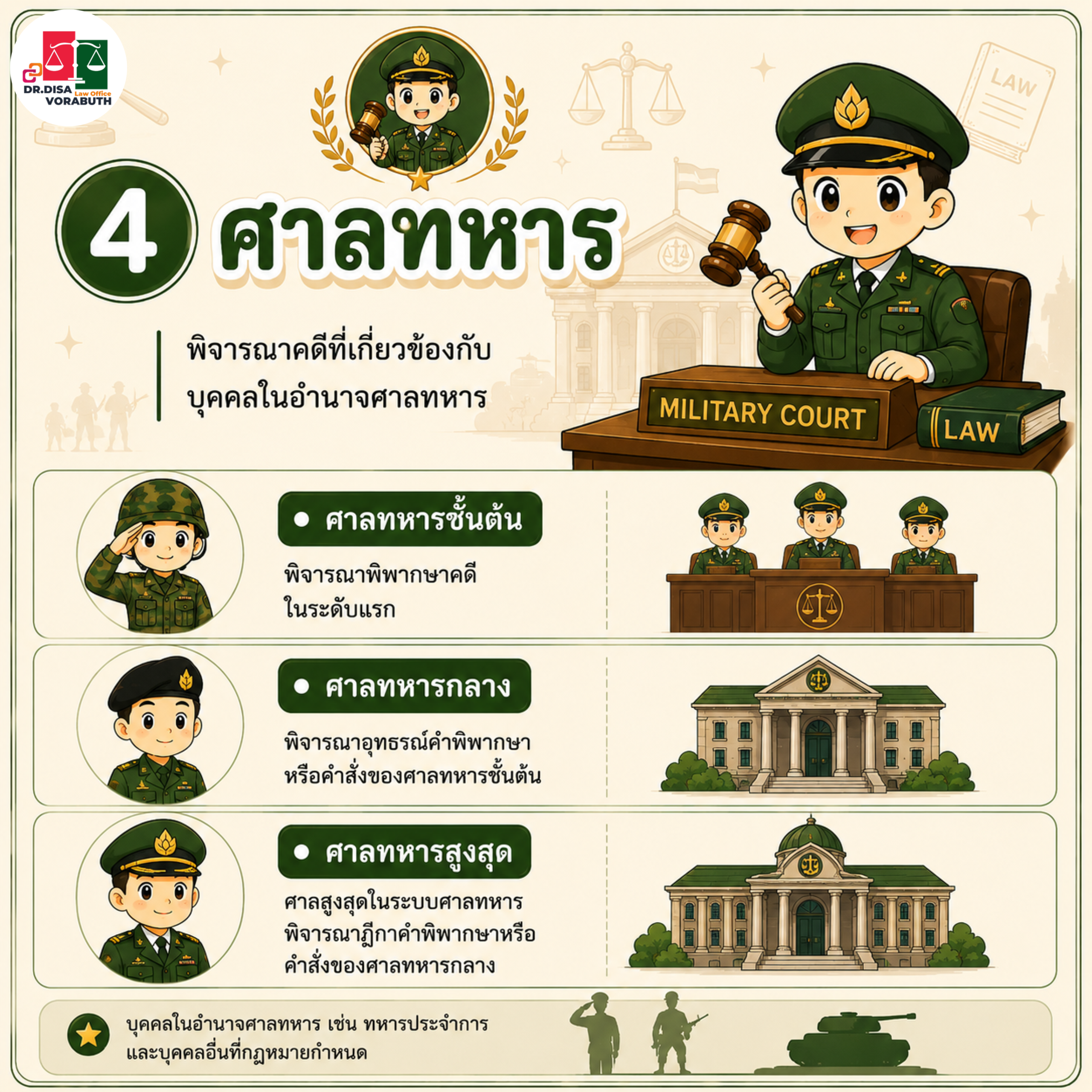
4. Military Courts
Military Courts have the authority to hear and adjudicate cases involving persons who fall under the jurisdiction of the Military Courts, particularly certain types of criminal cases involving military personnel or cases that the law specifically places under the jurisdiction of the Military Courts.
Examples of cases that may fall under the jurisdiction of the Military Courts
Cases where the offender is a military officer or military personnel and the offense falls within the jurisdiction of the Military Courts.
Cases involving military discipline or official military duties.
Cases that specific laws prescribe to be under the jurisdiction of the Military Courts.
Levels of the Military Courts
In general, the Military Courts are divided into three levels: the Military Court of First Instance, the Central Military Court, and the Supreme Military Court. Their structure and proceedings are governed by the law on the organization of Military Courts.
⚖️ Why Is It Important to Know Which Court Has Jurisdiction Over Your Case?
Knowing which type of court your case should be filed with is very important because each type of court has different jurisdiction. If a case is filed with a court that does not have jurisdiction, the proceedings may be delayed, the complaint may need to be amended, or unnecessary time and expenses may be incurred.
For example, divorce cases, division of marital property, or child support claims generally fall under the Court of Justice system. However, if the case involves suing a government agency for issuing an unlawful order, it may need to be considered whether the matter falls within the scope of an administrative case.
Summary of Thailand’s Court System
Thailand’s court system is divided into four main types:
The Courts of Justice hear and adjudicate general cases, such as civil cases, criminal cases, and specialized cases.
The Administrative Courts hear disputes between individuals and government agencies or state officials.
The Constitutional Court decides issues relating to the Constitution.
The Military Courts hear cases involving persons who fall under the jurisdiction of the Military Courts.
Therefore, before initiating legal proceedings, it is important to clearly determine which court has jurisdiction over the matter. This helps ensure that the case proceeds correctly and efficiently, without adversely affecting the rights of the parties involved.
Note
This article is prepared for general legal educational purposes only and does not constitute legal advice for any specific case. Each case may involve different facts and legal issues. If an actual dispute arises, it is advisable to consult a lawyer to assess the appropriate course of legal action.
 Tel : 062-652-4259 (Attorney Dr. Ning)
 LINE ID : @disavorabuthlaw
 For more information, please follow us on
ด้วยประสบการณ์ด้านกฎหมายที่สั่งสมมาตั้งแต่ปี พ.ศ. 2555 เราคือผู้เชี่ยวชาญที่คุณวางใจได้ในทุกปัญหาทางกฎหมาย ไม่ว่าจะเป็น กฎหมายแพ่งและพาณิชย์ ที่ครอบคลุมสัญญาต่างๆ การฟ้องร้อง และการดำเนินคดี หรือกฎหมายแรงงาน ที่ช่วยให้ธุรกิจของคุณหลีกเลี่ยงข้อพิพาท นอกจากนี้ เรายังเชี่ยวชาญใน กฎหมายครอบครัว กฎหมายมรดก กฎหมายคุ้มครองผู้บริโภค กฎหมายทรัพย์สินทางปัญญา กฎหมายอาญา และกฎหมายอื่นๆ นอกจากนี้ เรายังให้บริการให้คำปรึกษากฎหมายและบริการจดทะเบียนที่ครอบคลุมครบวงจรทั้งในกรุงเทพฯ และนครราชสีมา
ด้วยประสบการณ์ด้านกฎหมายที่สั่งสมมาตั้งแต่ปี พ.ศ. 2555 เราคือผู้เชี่ยวชาญที่คุณวางใจได้ในทุกปัญหาทางกฎหมาย ไม่ว่าจะเป็น กฎหมายแพ่งและพาณิชย์ ที่ครอบคลุมสัญญาต่างๆ การฟ้องร้อง และการดำเนินคดี หรือกฎหมายแรงงาน ที่ช่วยให้ธุรกิจของคุณหลีกเลี่ยงข้อพิพาท นอกจากนี้ เรายังเชี่ยวชาญใน กฎหมายครอบครัว กฎหมายมรดก กฎหมายคุ้มครองผู้บริโภค กฎหมายทรัพย์สินทางปัญญา กฎหมายอาญา และกฎหมายอื่นๆ นอกจากนี้ เรายังให้บริการให้คำปรึกษากฎหมายและบริการจดทะเบียนที่ครอบคลุมครบวงจรทั้งในกรุงเทพฯ และนครราชสีมา