


Love and Legal Planning Can Go Hand in Hand
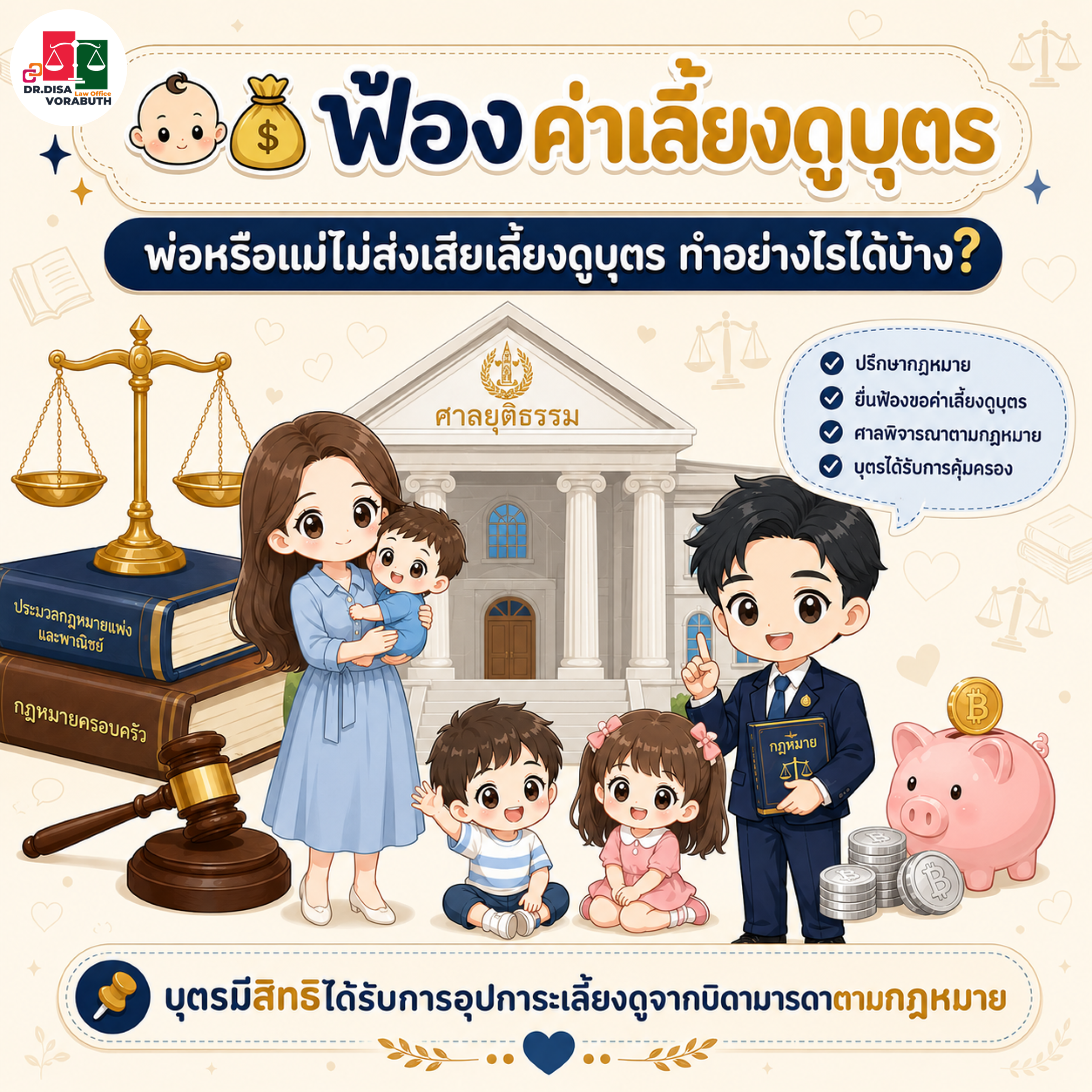
Child support is an important matter that directly concerns the rights of the child. A child needs to be provided with food, housing, education, healthcare, and daily living expenses. Even if the parents have separated, live apart, or are divorced, the legal duty to support and maintain the child still remains.
Under Section 1564 of the Thai Civil and Commercial Code, parents have the duty to support and provide proper education for their child while the child is still a minor. Parents are also required to support a child who has reached legal age only in cases where the child is disabled and unable to support themselves.
Therefore, if either parent fails to provide child support or provides insufficient support, the other parent may exercise legal rights to claim child support. The court will consider the child’s needs, the financial status of the parent who has the duty to pay, and the circumstances of each family on a case-by-case basis.
What Is Child Support?
Child support, legally referred to as “maintenance for a child,” is the money or expenses that a father or mother is responsible for providing so that the child can live, grow, and receive proper education.
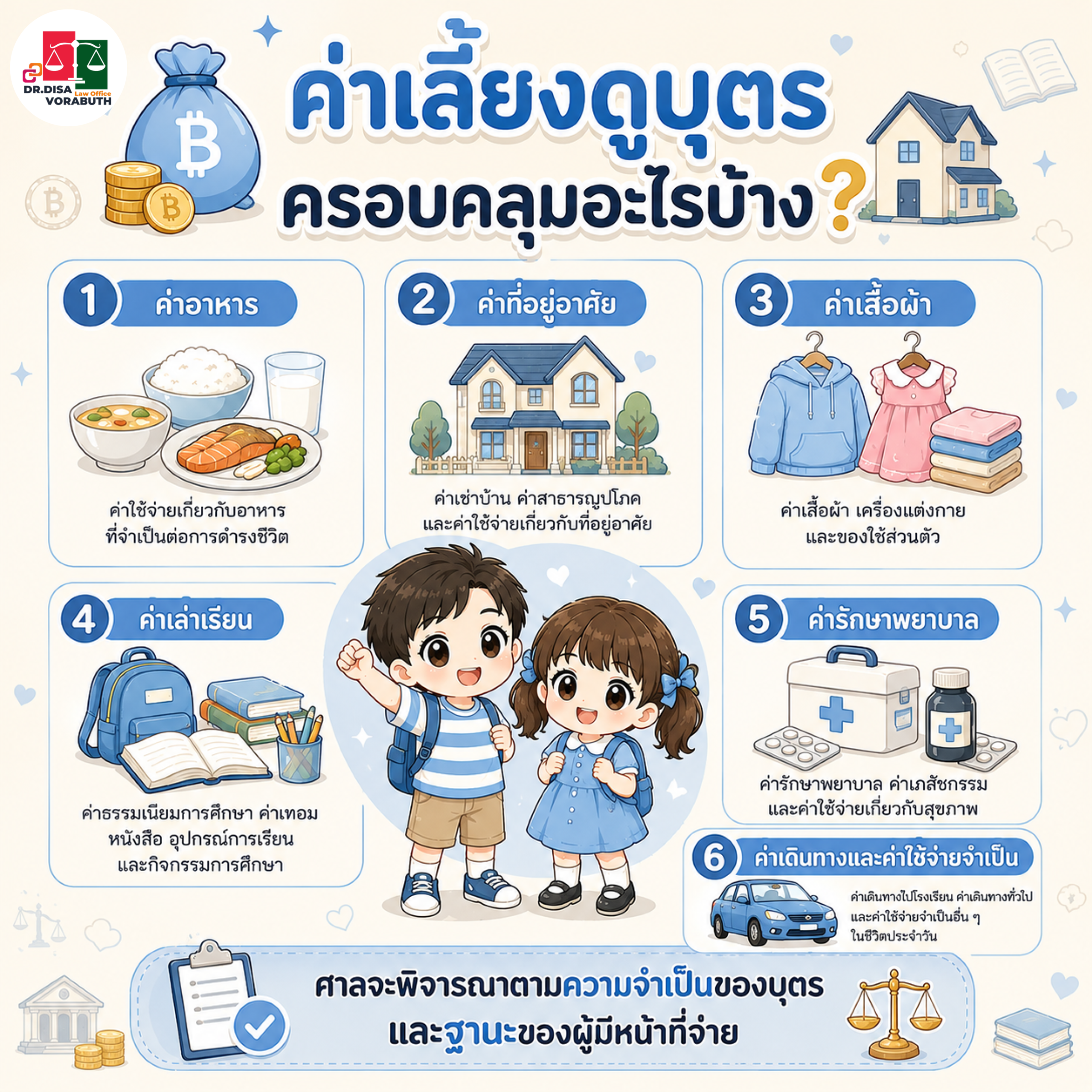
Child support does not refer only to food expenses. It also covers various necessary expenses, such as food, clothing, housing, school fees, educational supplies, medical expenses, transportation costs, and other expenses necessary for the child’s daily living.
The key principle is that child support is the child’s right, not the personal money of the parent who takes care of the child. Therefore, even if the parents have conflicts with each other, their duty toward the child must continue.
What Is the Legal Duty of Parents to Support Their Child?
The law requires parents to support and provide proper education for their child, especially while the child is still a minor, which generally means before the child reaches legal age.
In addition, Section 1565 provides that a claim for child support, or a request for the child to receive support in another appropriate manner, may be brought not only by the public prosecutor, but also by the father or mother.
In simple terms, if one parent does not help pay for the child’s expenses, the other parent may file a child support claim with the court so that the court can clearly determine the amount of support and the payment obligation.
When Can a Child Support Claim Be Filed?
A child support claim may arise in several situations, such as when the parents live separately, one parent does not provide any financial support, provides support irregularly, provides an amount that is too low compared with the child’s actual expenses, or where an agreement has already been made but one party fails to comply with it.
Under the legal principles on maintenance, Section 1598/38 provides that maintenance between parents and children may be claimed when the person entitled to receive maintenance has not received support or has received insufficient support. In determining the amount, the court will consider the ability of the person who has the duty to provide support, the status of the recipient, and the circumstances of the case.
Example
A mother takes care of the child after separating from the father. The father previously agreed to pay child support of THB 8,000 per month, but later failed to make payments for several consecutive months. The mother may gather evidence of the child’s expenses and evidence of non-payment in order to file a child support claim with the court.
Who Has the Right to File a Child Support Claim?
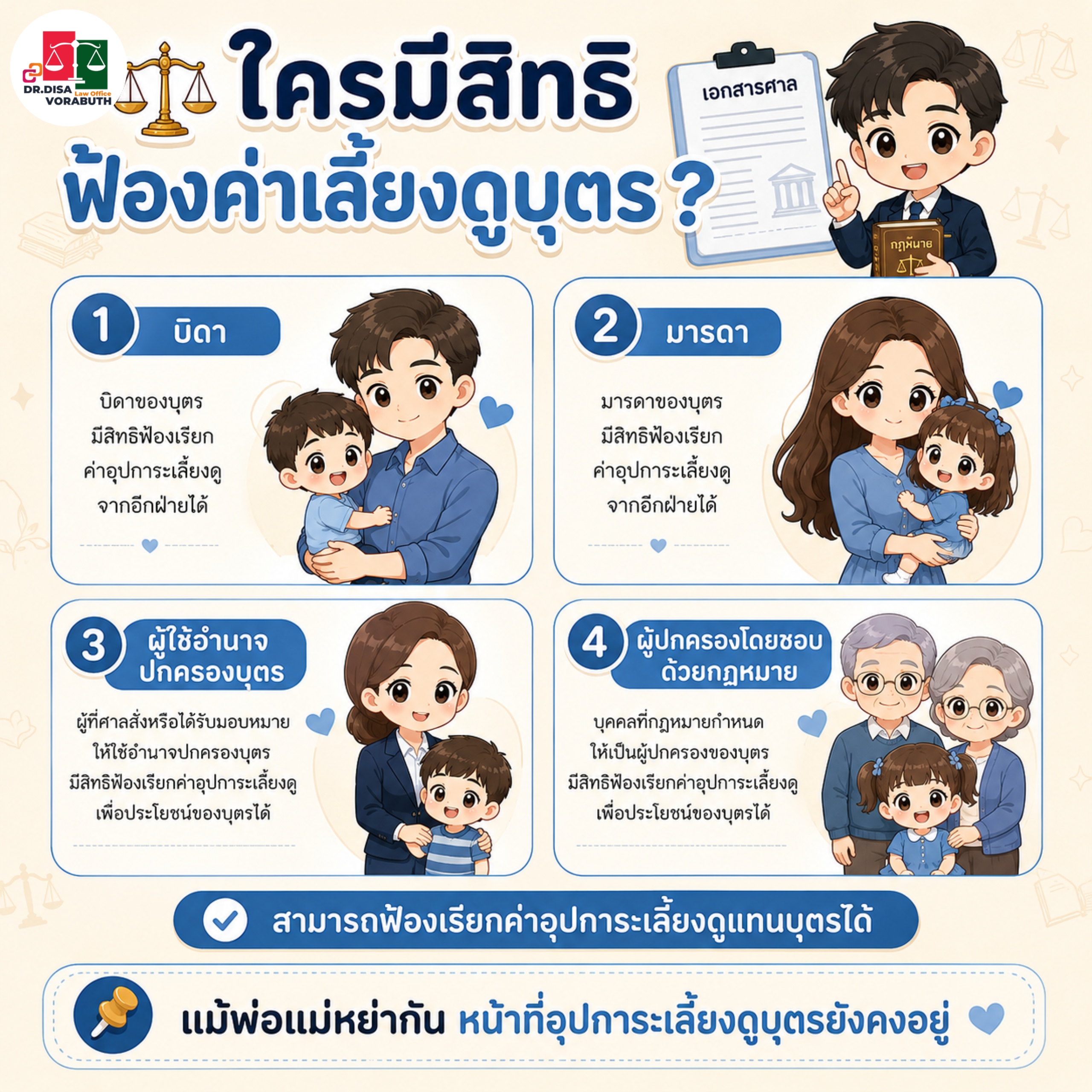
In general, persons who may have the right to file a child support claim include the father, the mother, the person exercising parental authority, or the lawful guardian, depending on the legal status and facts of each case.
1. The Child’s Mother
A mother who is taking care of the child may file a claim for child support against the father if the father does not provide support or provides insufficient support.
Example
A mother takes care of her 6-year-old child alone and bears the costs of food, education, and medical care, while the father does not contribute at all. The mother may file a child support claim against the father.
2. The Child’s Father
If the father is the person taking care of the child and the mother does not help with the child’s expenses, the father may also file a child support claim against the mother.
Example
A father takes care of the child after the mother moves to another province. The mother has income but has never contributed to the child’s expenses. The father may exercise his right to claim child support from the mother.
3. The Person Exercising Parental Authority
In some cases, the court may designate a person to exercise parental authority over the child, such as either the father or the mother. If that person is caring for the child and bearing the expenses, they may take legal action for the benefit of the child.
4. The Lawful Guardian
If the child is under the care of another person, such as a grandfather, grandmother, or a legally recognized guardian, that person may have the right to take action to claim maintenance on behalf of the child, depending on the facts and legal status.
Can Child Support Still Be Claimed After the Parents Divorce?
The divorce of the parents does not end the duty to support the child. Even though the marital status of the parents has ended, their status as parents and their duties toward the child remain.
If the divorce registration or divorce agreement already specifies child support, but the other party fails to pay as agreed, the parent taking care of the child may use that agreement as evidence in legal proceedings.
Example
The parents divorce and agree in the divorce record that the father will pay child support of THB 10,000 per month. However, he pays for only two months and then stops paying. The mother may use the divorce agreement, money transfer records, and evidence of the child’s expenses to support legal action or enforcement of her rights.
Can Child Support Be Claimed If the Parents Were Not Legally Married?
In this case, the key issue to consider is the “legal status of the father.”
In general, the mother is legally recognized as the child’s mother from the time the child is born. However, if the father was not legally married to the mother, he may need to register the child as his legitimate child, or there may need to be a court judgment declaring him to be the child’s legal father, either before or together with the child support claim.
Example
A man and a woman live together without registering their marriage and have one child together. Later, the man refuses to take responsibility for the child’s expenses. If the man has not registered the child as his legitimate child, the mother may need to file a case requesting the court to declare that the child is the legitimate child of the man, together with a claim for child support in the same case, as appropriate.
What Factors Does the Court Consider When Determining Child Support?
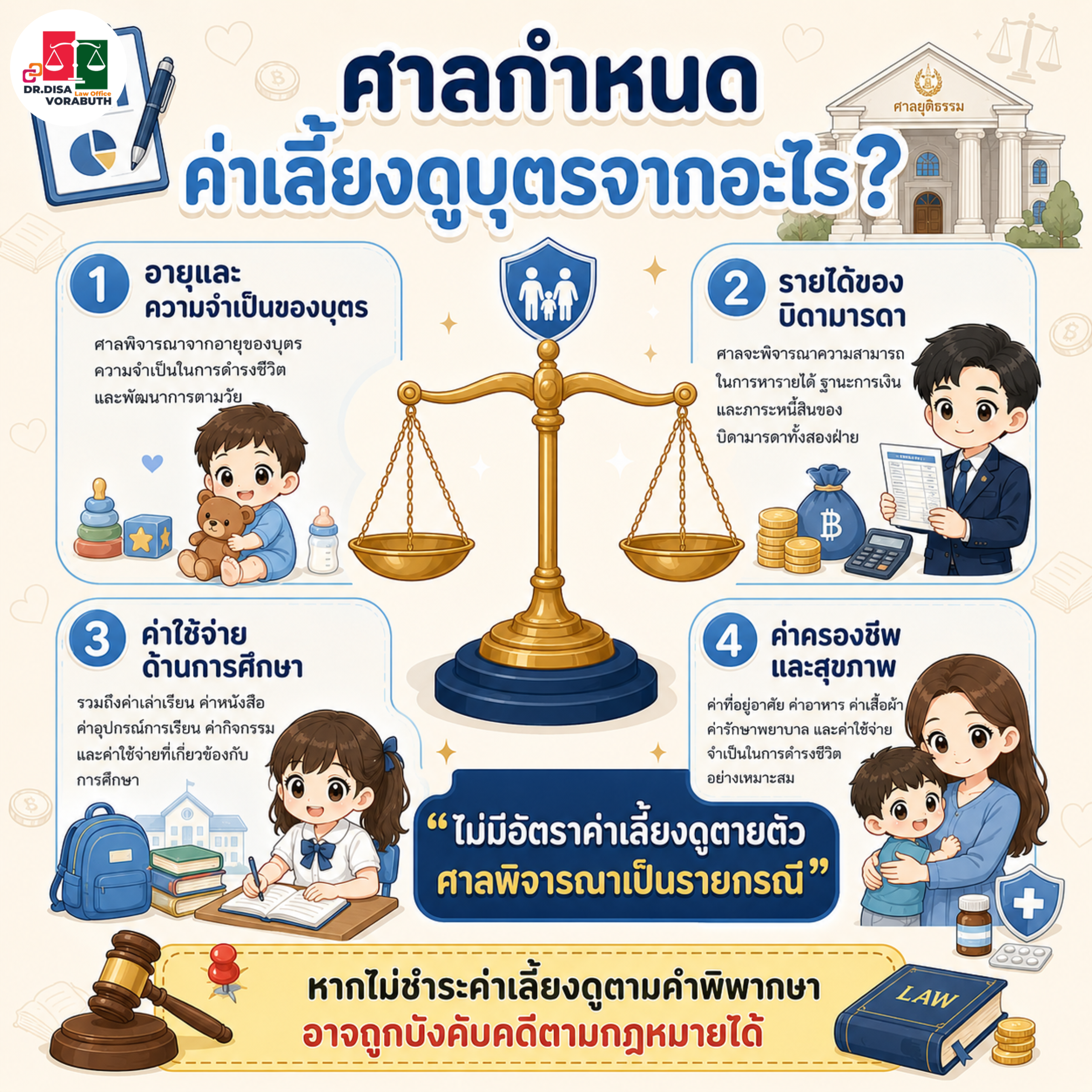
Many people understand that child support has a fixed rate, such as THB 5,000 or THB 10,000 per month. In reality, however, the law does not prescribe a fixed amount. The court will consider each case individually based on several factors.
1. The Child’s Age and Needs
Children of different ages have different expenses. Young children may have expenses for food, milk, diapers, medicine, and childcare. School-age children may have expenses for tuition fees, school supplies, transportation, and activities.
2. Educational Expenses
Tuition fees, books, school supplies, tutoring fees, school activity fees, and transportation to school are important factors that the court may take into consideration.
3. Living Expenses and Health
Food, clothing, housing, utilities, medical expenses, medicine, health insurance, and other necessary daily living expenses of the child are all information that should be presented to the court.
4. Income and Financial Status of the Parents
The court will consider the earning capacity, regular income, assets, debts, and ability to bear expenses of both parents. The court does not consider only the amount claimed by one party.
5. Circumstances of Each Family
The court may consider the specific circumstances of the family, such as who is the primary caregiver of the child, how much the other parent previously provided, whether the child’s expenses are truly necessary, and what amount of child support would best serve the child’s interests.
What Expenses Can Child Support Cover?
Child support may cover various types of expenses, such as:
Food expenses
These include daily meals, milk, nutritional supplements, or expenses related to the child’s nutrition.
Housing expenses
These include rent, utilities, or reasonable housing-related expenses.
Clothing and personal items
These include clothing, shoes, uniforms, school uniforms, and necessary daily personal items.
Tuition and educational expenses
These include tuition fees, books, school supplies, tutoring fees, school activity fees, and transportation to school.
Medical expenses
These include medicine, doctor’s fees, medical treatment, dental care, health insurance, or other necessary health-related expenses.
Transportation and other necessary expenses
These include transportation to school, transportation to hospitals, internet expenses for education, or other expenses appropriate to the child’s age and needs.

Documents and Evidence to Prepare Before Filing a Child Support Claim
Before filing a child support claim, it is important to prepare clear evidence so that the court can see the child’s needs and the financial ability of the parent who has the duty to pay.
Documents relating to the child
These may include the child’s birth certificate, the child’s household registration, documents proving the legal status of the parents, child legitimation documents, or a court judgment regarding paternity, if any.
Documents relating to the child’s expenses
These may include tuition fee receipts, receipts for books, food expenses, school uniforms, medical expenses, medicine, tutoring fees, transportation costs, and evidence of monthly expenses.
Evidence of the other party’s income
These may include salary slips, salary certificates, bank statements, documents showing business income, evidence of asset ownership, or other information showing the other party’s financial status.
Evidence of non-payment or insufficient support
These may include chat records, evidence of payment demands, past money transfer records, evidence showing that the other party failed to pay as agreed, or evidence showing that the parent taking care of the child has had to bear the expenses alone.
Steps for Filing a Child Support Claim
1. Gather Evidence
Start by collecting documents relating to the child, the child’s expenses, the other party’s income, and evidence of non-payment or insufficient support. This helps present the facts clearly.
2. Consult a Lawyer
It is advisable to consult a lawyer to assess your legal rights, determine how the case should be filed, whether a paternity or legitimation claim must also be filed, and what amount of child support would be appropriate to claim.
3. File the Case with the Court
Once the statement of claim and supporting documents are ready, the case will be filed with the court that has jurisdiction. In general, cases involving children and family matters fall under the jurisdiction of the Juvenile and Family Court. The Central Juvenile and Family Court also has articles and legal knowledge resources specifically relating to claims for child maintenance.
4. Court Mediation or Court Proceedings
Family cases often include a mediation process to give the parties an opportunity to reach an agreement, such as the amount to be paid, the payment date, the payment method, and special expenses for the child. If the parties can reach an agreement, the court may record a compromise agreement or issue a judgment in accordance with the agreement.
5. Court Judgment
If the parties cannot reach an agreement, the court will consider the evidence and issue a judgment determining child support as appropriate. The court will take into account the child’s needs, the status of the recipient, the financial ability of the person who has the duty to pay, and the circumstances of the case.
What Can Be Done If the Other Party Does Not Pay Child Support as Ordered by the Court?
If the court has issued a judgment or if there is a court-approved agreement, but the other party fails to pay child support as required, the person entitled to receive the payment may take legal enforcement action. This may include requesting enforcement of payment under the judgment, garnishment of salary, attachment of bank accounts, or seizure of assets in accordance with legal procedures.
Example
The court orders the father to pay child support of THB 12,000 per month on the 5th day of each month. However, the father fails to pay for six consecutive months. The mother may gather evidence of non-payment and proceed with legal enforcement under the judgment.
Can Child Support Be Increased or Reduced Later?
Child support may be increased or reduced later if the circumstances, income, or financial status of the parties change.
Section 1598/39 provides that when an interested person shows that the circumstances, income, or financial status of the parties have changed, the court may modify the child maintenance order by revoking, reducing, increasing, or reinstating maintenance as appropriate.
Example of Requesting an Increase
The court previously ordered child support of THB 6,000 per month when the child was still young. Later, the child starts school and has increased expenses for tuition, transportation, and additional classes, while the father’s income has also increased. In this case, the mother may request the court to increase the child support.
Example of Requesting a Reduction
The court previously ordered child support of THB 15,000 per month. Later, the person who has the duty to pay faces serious financial difficulties, a significant decrease in income, or necessary health-related circumstances. That person may request the court to reduce the child support, but clear supporting evidence must be provided.
Filing a child support claim is the exercise of legal rights to protect the best interests of the child. If either parent fails to provide support or provides insufficient support, the other parent may file a claim for child maintenance with the court.
The court will consider the child’s age and needs, expenses relating to food, housing, education, healthcare, the parents’ income, and the circumstances of each family. There is no fixed rate for child support.
Even if the parents are divorced or living separately, the duty to support the child remains. If a court judgment has been issued and the responsible party fails to comply, legal enforcement may be pursued. If the income, financial status, or the child’s expenses later change, child support may also be increased or reduced in accordance with the law.
 Tel : 062-652-4259 (Attorney Dr. Ning)
 LINE ID : @disavorabuthlaw
 For more information, please follow us on
ด้วยประสบการณ์ด้านกฎหมายที่สั่งสมมาตั้งแต่ปี พ.ศ. 2555 เราคือผู้เชี่ยวชาญที่คุณวางใจได้ในทุกปัญหาทางกฎหมาย ไม่ว่าจะเป็น กฎหมายแพ่งและพาณิชย์ ที่ครอบคลุมสัญญาต่างๆ การฟ้องร้อง และการดำเนินคดี หรือกฎหมายแรงงาน ที่ช่วยให้ธุรกิจของคุณหลีกเลี่ยงข้อพิพาท นอกจากนี้ เรายังเชี่ยวชาญใน กฎหมายครอบครัว กฎหมายมรดก กฎหมายคุ้มครองผู้บริโภค กฎหมายทรัพย์สินทางปัญญา กฎหมายอาญา และกฎหมายอื่นๆ นอกจากนี้ เรายังให้บริการให้คำปรึกษากฎหมายและบริการจดทะเบียนที่ครอบคลุมครบวงจรทั้งในกรุงเทพฯ และนครราชสีมา
ด้วยประสบการณ์ด้านกฎหมายที่สั่งสมมาตั้งแต่ปี พ.ศ. 2555 เราคือผู้เชี่ยวชาญที่คุณวางใจได้ในทุกปัญหาทางกฎหมาย ไม่ว่าจะเป็น กฎหมายแพ่งและพาณิชย์ ที่ครอบคลุมสัญญาต่างๆ การฟ้องร้อง และการดำเนินคดี หรือกฎหมายแรงงาน ที่ช่วยให้ธุรกิจของคุณหลีกเลี่ยงข้อพิพาท นอกจากนี้ เรายังเชี่ยวชาญใน กฎหมายครอบครัว กฎหมายมรดก กฎหมายคุ้มครองผู้บริโภค กฎหมายทรัพย์สินทางปัญญา กฎหมายอาญา และกฎหมายอื่นๆ นอกจากนี้ เรายังให้บริการให้คำปรึกษากฎหมายและบริการจดทะเบียนที่ครอบคลุมครบวงจรทั้งในกรุงเทพฯ และนครราชสีมา