

1. Relevant Laws
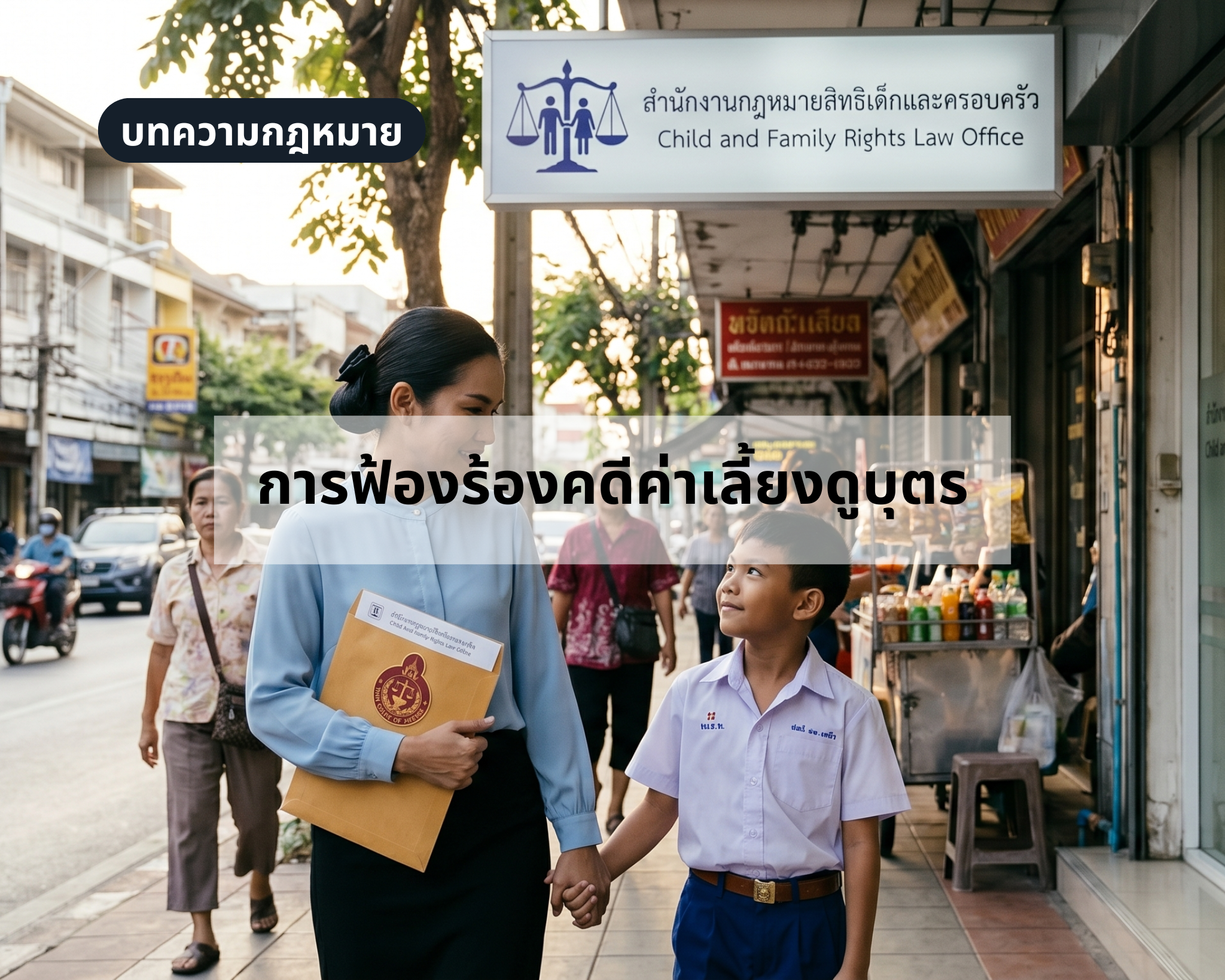
Child support is a right that a child is entitled to receive under the Thai Civil and Commercial Code as follows:
Parental Duties toward Children
Section 1564 Parents are bound to maintain their children and provide them with proper education while they are minors. Parents are also bound to maintain their children who have reached legal age only if such children are disabled and unable to support themselves.
Explanation of the Meaning and Legal Principles Concerning Parental Duties toward Children
1. Duties toward a “minor child” who has not yet reached 20 years of age
• An unavoidable legal duty: Both the father and the mother have a joint duty to provide maintenance for their child, such as food, housing, medical expenses, and education costs.
• “As appropriate”: The law uses this term to mean that support and education must be consistent with the financial status, social circumstances, and ability of the parents in each family. The law does not prescribe a fixed amount.
• Divorce does not end the duty: Whether the parents have registered a divorce or agreed that one parent shall have sole parental authority, the other parent still has a duty to contribute to child maintenance, unless otherwise agreed in the divorce agreement attached to the divorce registration.
• Even if parental authority is revoked, the duty to pay remains: Even if the court orders the revocation of parental authority of either the father or the mother, the duty to pay child support under this section still remains.
2. Duties toward a child who has reached legal age, meaning 20 years of age or older
• General principle: the duty ends. When the child reaches 20 years of age, or becomes legally competent through marriage, the parents’ legal duty to provide maintenance and education generally ends.
• Exception: the duty may continue. Parents are required to continue supporting an adult child only when both of the following conditions are met:
1. The child is disabled: The child has a physical or mental disability, chronic illness, or impairment.
2. The child is unable to support themselves: The child is unable to earn a living due to such disability.

Child Maintenance
Section 1598/38 Maintenance between spouses, or between parents and children, may be claimed when the party entitled to receive maintenance has not received maintenance or has received insufficient maintenance appropriate to their status. The court may grant maintenance in any amount, or may refuse to grant it, by taking into consideration the ability of the person who has the duty to provide maintenance, the status of the recipient, and the circumstances of the case.
Explanation of the Meaning and Legal Principles Concerning Child Maintenance
1. The ability of the person who has the duty to provide maintenance, or the payer
• The court will consider how much monthly income the father or mother who has the duty to pay has, what assets they own, and how much necessary debt or living expenses they have.
• The court will not order payment if doing so would cause the payer such hardship that they would be unable to support themselves.
2. The status of the recipient, or the beneficiary/child
• The court will consider the child’s actual needs and expenses, such as tuition fees, school supplies, food, medical expenses, clothing, and daily living expenses.
• If the child has special needs, a chronic illness, or is studying at a level that requires higher expenses, the court may take these factors into account as appropriate.
3. The circumstances of the case
• This refers to the overall circumstances, such as the current economic situation, the cost of living in the city where the child resides, or any previous agreement made between the parents.
Child Support under an Agreement or Court Judgment
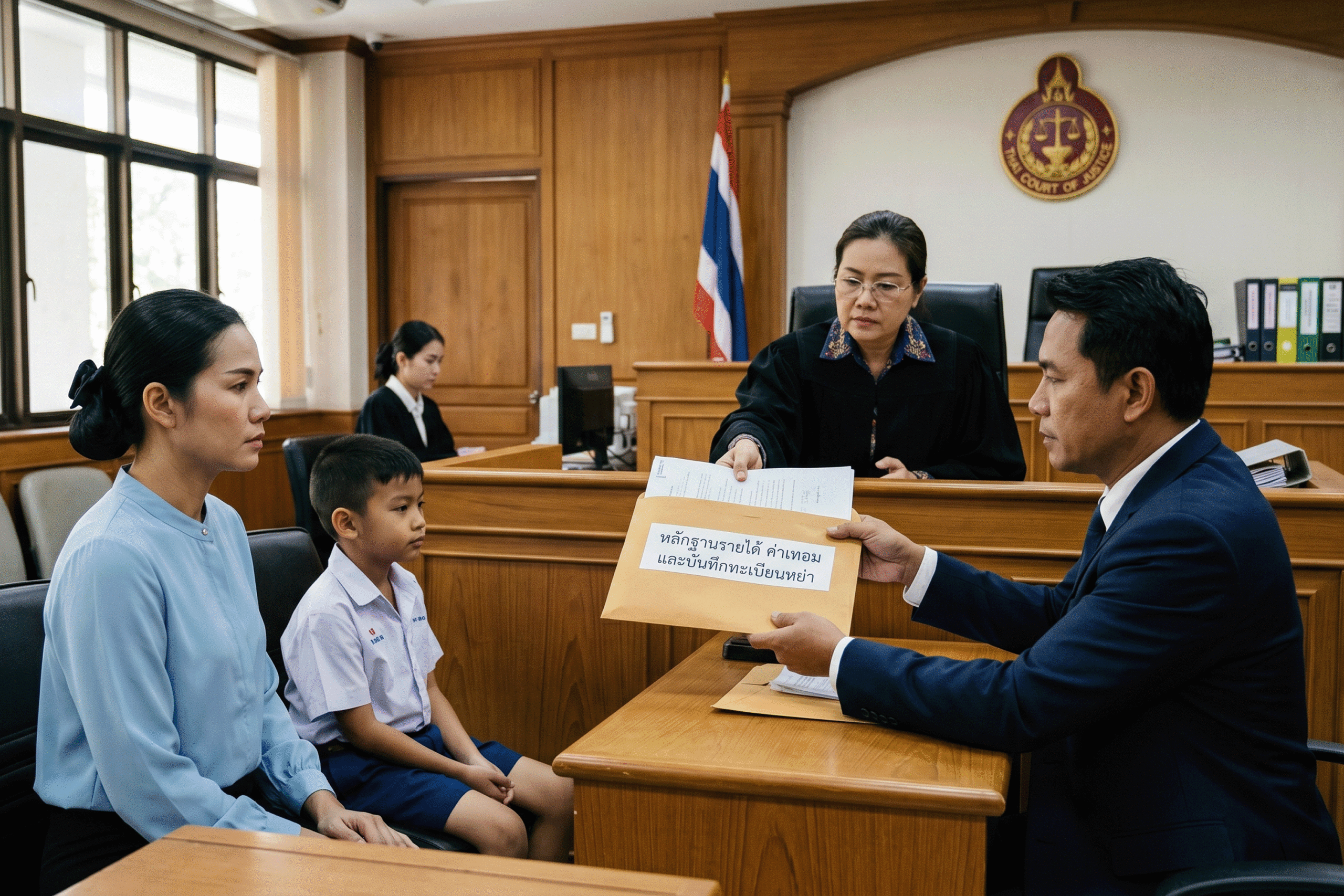
Section 1522 If the spouses divorce by mutual consent, they shall make an agreement in the divorce agreement as to whether both spouses, or either spouse, will provide child maintenance and in what amount.
If the divorce is granted by a court judgment, or if the divorce agreement does not specify child maintenance, the court shall determine the matter.
Explanation of the Meaning and Legal Principles Concerning Child Support under an Agreement or Court Judgment
1. Divorce by mutual consent, or divorce registered at the district office
• Freedom of contract: The law encourages spouses to first agree between themselves who will pay child support, how much will be paid, and how it will be paid, such as monthly payments or a lump-sum payment.
• Divorce agreement attached to the divorce registration: This agreement must be recorded in the divorce agreement attached to the divorce registration. It becomes legally binding immediately. If either party fails to comply, the other party may use the agreement to pursue legal enforcement without having to start the process from the beginning.
2. Divorce by court judgment, or contested divorce
• If the parties cannot reach an agreement, or if the divorce is filed in court based on legal grounds, the court will exercise its legal authority to determine the amount of child support.
• The court will apply the principles under Section 1598/38, including the ability of the person who has the duty to provide support and the status of the recipient, in order to determine the fairest amount.

Right to File a Claim for Child Maintenance
Section 1565 A claim for child maintenance, or a request for the child to receive maintenance in another manner, may be brought not only by the public prosecutor under Section 1562, but also by the father or the mother.
Explanation of the Meaning and Legal Principles Concerning the Right to File a Claim for Child Maintenance
1. Who has the right to file a claim for child maintenance on behalf of the child?
In general, a child who is still a minor cannot file a case by themselves and must have a representative act on their behalf. This section identifies the persons who may have the right to bring such a case, including:
• The public prosecutor: A person with direct authority to act in the protection of the child’s rights and interests.
• The person taking care of the child: For example, a grandfather, grandmother, or another person who has actually been caring for the child, even if they are not the child’s legal parent.
• Close relatives of the child: Such as an elder sibling, aunt, or uncle who sees that the child has not been treated fairly.
• A person appointed to protect the child’s interests: A person whom the court considers appropriate to appoint specifically for this case.
2. What claims may be filed under this section?
• A claim for child maintenance: To compel the father or mother to pay child support.
• A claim for the child to be legally recognized: In cases where the father refuses to register the child as his legitimate child, which may later lead to the right to claim child support.
Parental Authority and Child Care
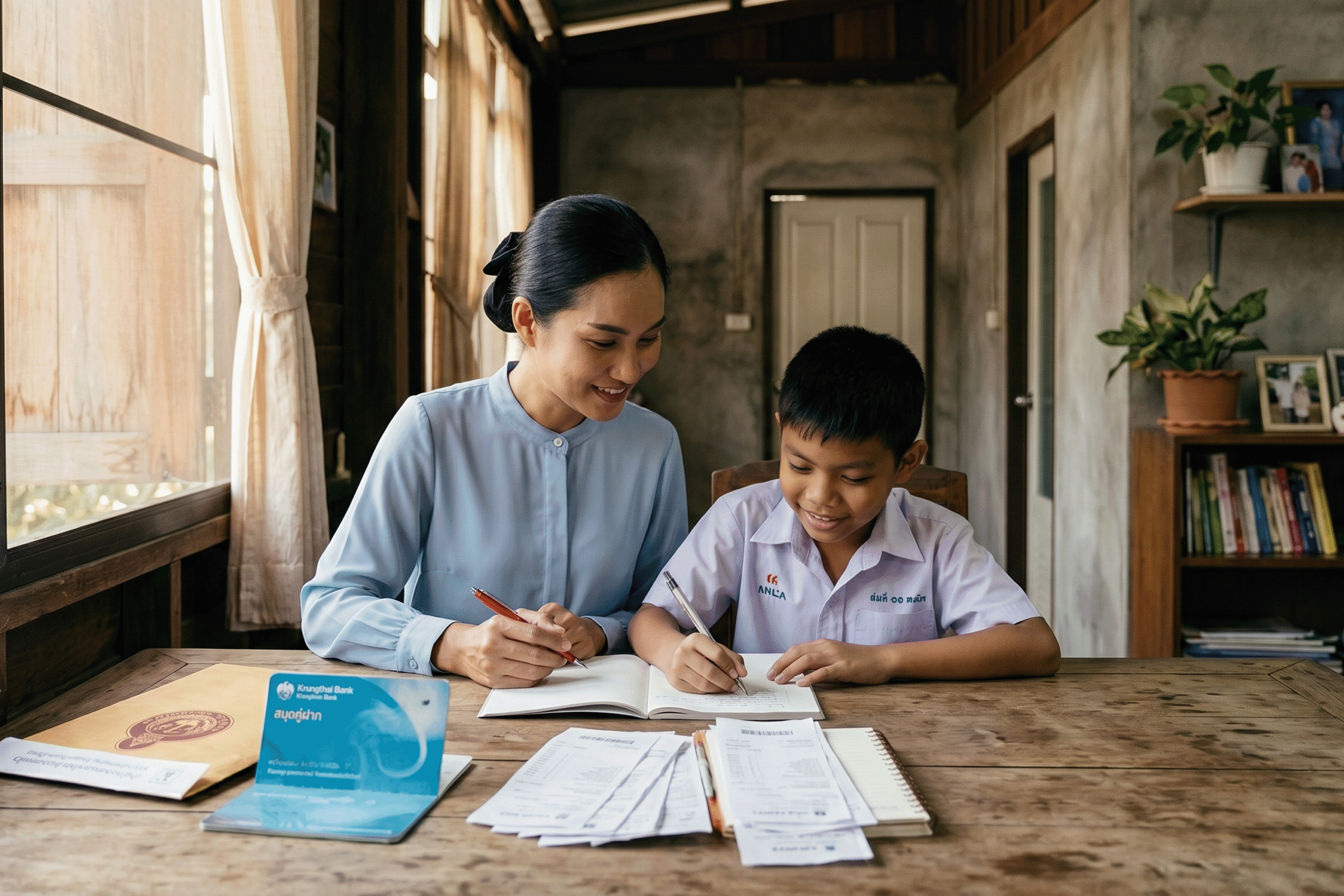
Section 1566 A child who has not yet reached legal age shall be under the parental authority of the father and mother. Parental authority shall be exercised by either the father or the mother in the following cases:
(1) The mother or father is deceased.
(2) It is uncertain whether the mother or father is alive or deceased.
(3) The mother or father has been adjudged by the court to be incompetent or quasi-incompetent.
(4) The mother or father must be admitted to a hospital due to mental infirmity.
(5) The court orders that parental authority shall be exercised by either the father or the mother.
(6) The father and mother have made an agreement as permitted by law.
Explanation of the Meaning and Legal Principles Concerning Parental Authority and Child Care
1. The principle of “joint parental authority”
In general, if the father and mother are legally married, both parents jointly exercise parental authority over the child. This means that important decisions, such as changing the child’s residence, choosing a school, applying for a passport, or managing the child’s property, generally require the consent of both parents.
2. Cases where parental authority belongs to only one parent
The law clearly provides exceptions under items (1) to (6) in order to prevent obstacles in managing matters concerning the child, such as:
• Necessary circumstances: For example, where the other parent has passed away, is missing, or has been adjudged incompetent.
• Agreement between the parents, such as upon divorce: If the parents agree in the divorce record that one parent shall have sole parental authority over the child, parental authority will belong to that parent as agreed.
• Court order: If the parents are in dispute, or if one parent behaves inappropriately, the court may order that the more suitable parent exercise sole parental authority, or may revoke the parental authority of the other parent.
2. Elements of the Relevant Laws
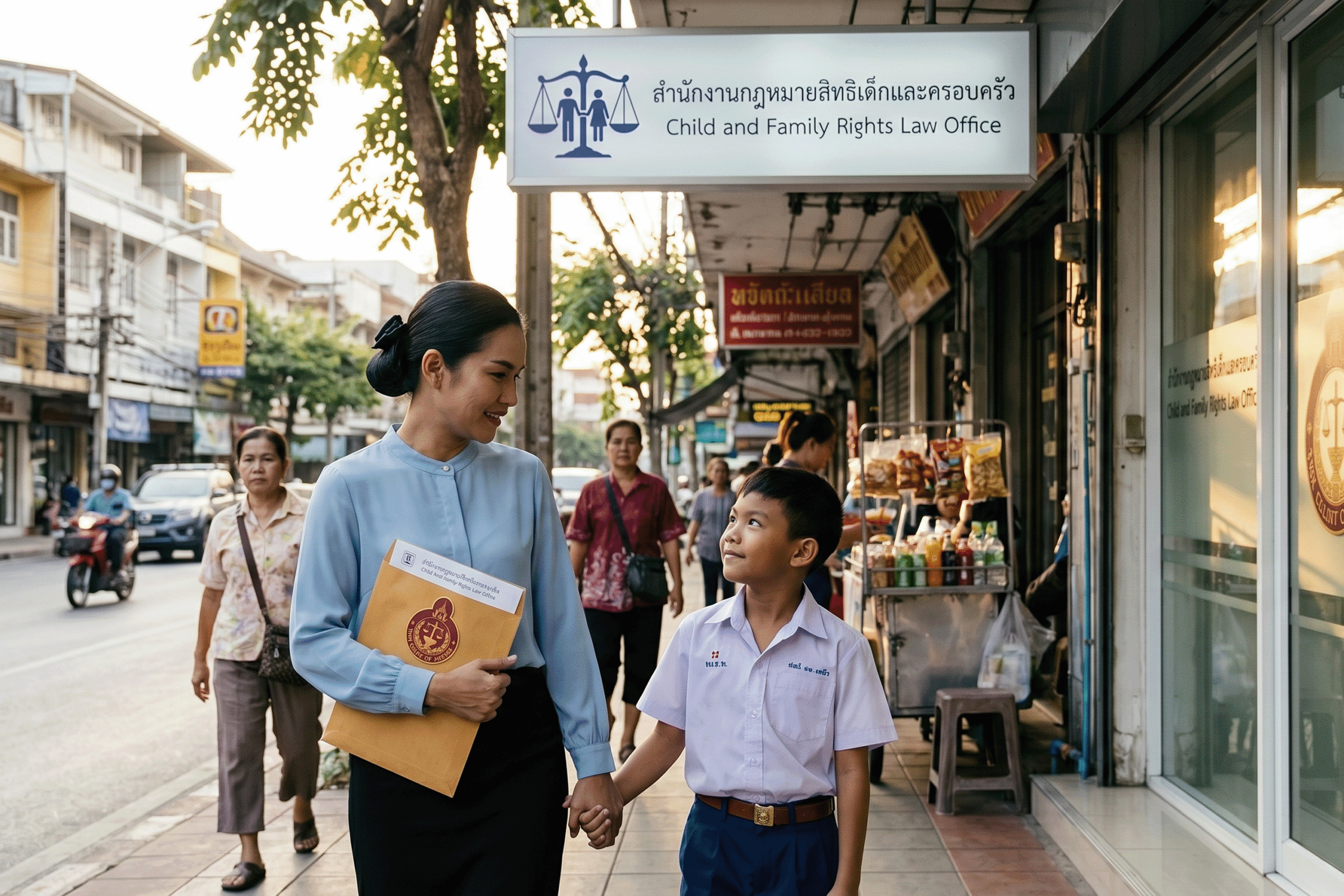
In considering a child support case, the court will examine several important elements as follows:
2.1 Relationship between the Parties The court must consider the legal relationship between the plaintiff and the defendant. This can generally be divided into three main situations.
| Type of Child | Rights Entitled |
|---|---|
| A child born to legally married spouses | Entitled to full legal rights |
| A child born out of wedlock whose father has legally recognized the child | Entitled to legal rights after recognition |
| A child whom the court has adjudged to be a legitimate child | Entitled to legal rights after the court judgment |
2.2 Ability of the Defendant to Pay Child Support The court will consider the “financial status” and “ability” of the party who has the duty to pay child support, including:
• Regular income, salary, wages, or business profits
• Assets owned, such as real estate, vehicles, or savings
• Existing debts and expenses
• Future earning capacity
Example: Mr. A earns a salary of THB 50,000 per month. The court may determine child support for one child at approximately THB 8,000–12,000 per month, depending on other relevant circumstances.
2.3 Needs and Age of the Child The court will consider the child’s actual needs, including:
• Food, clothing, and basic necessities
• Educational expenses, whether the child attends a public or private school, including the level of education and related costs
• Medical expenses, medicine, and the child’s health needs
• Skill-development activities, such as music, sports, or art
• The child’s age, as younger children may have higher expenses in certain areas
2.4 Period for Paying Child Support In general, child support is paid until the child reaches legal age, which is 20 years old. However, the period may be extended if the child is disabled or is pursuing a bachelor’s degree, depending on the agreement between the parties or the discretion of the court.
3. Key Points and Reasons to Have a Lawyer
Child support cases involve legal complexity and court procedures that require professional expertise, as follows:
3.1 Key Points of the Case
• Child support is the right of the child, not the personal right of the father or the mother.
• The court has independent authority to determine child support and is not always bound by the plaintiff’s claim.
• The parent with lower income may file a claim against the other parent, even if the parents are not divorced.
• Child support may be modified later if circumstances change.
3.2 Reasons to Hire a Lawyer
| ✅ Benefits of Having a Lawyer |
|---|
| ▸ Assess an appropriate and fair amount of child support and gather supporting evidence |
| ▸ File the statement of claim correctly in accordance with court forms and procedures, reducing the risk of defects in the claim |
| ▸ Examine witnesses and cross-examine the opposing party’s witnesses effectively in court |
| ▸ Negotiate and mediate before the case proceeds fully in court, helping save time and overall costs |
| ▸ Take enforcement action if the other party fails to comply with the court judgment |
| ▸ Request a modification or increase of child support later if circumstances change |
4. Results of Child Support Proceedings
The outcome of the case may take various forms, depending on the evidence, the financial status of the parties, and the discretion of the court.
4.1 Possible Outcomes of the Case
• The court may order child support in the amount requested by the plaintiff if sufficient supporting evidence is provided.
• The court may order child support in an amount lower than requested if the defendant proves that their income is insufficient.
• The court may order child support in an amount higher than requested if it is found that the defendant has concealed income or assets.
• The court may dismiss the case if the plaintiff lacks sufficient evidence or has no legal standing to file the claim.
• If the parties reach a settlement during the proceedings, the court may render judgment in accordance with the compromise agreement.
4.2 Retroactive Child Support
Under Section 1565, retroactive child support may be claimed for a period not exceeding five years from the date of filing the case. Therefore, if legal action is not taken promptly, the claimant may lose the right to claim child support for any period exceeding five years.
This is also related to Section 193/33 (4), concerning periodic payments in arrears, such as salaries, annual payments, pensions, maintenance payments, and other similar payments that are payable periodically.
4.3 Modification of the Judgment, Including Later Increase or Reduction
A child support judgment is not necessarily final forever. Either party may file a request for modification if there is a valid reason, such as a change in the payer’s income, an increase in the cost of living, or increased special needs of the child.
Under Section 1598/39, if an interested person shows that the circumstances, income, or financial status of the parties have changed, the court may modify the maintenance order by revoking, reducing, increasing, or reinstating maintenance as appropriate.
5. Additional Information You Should Know
5.1 Child Support for a Child Born Out of Wedlock
If the father was not legally married to the mother, a child born out of wedlock may still have the right to receive child support from the father. However, the process generally involves two steps:
1. Proving the parent-child relationship, either through the father’s legal recognition of the child or by filing a case to prove paternity, such as through a DNA test.
2. Once the child has been legally recognized, a child support claim may be filed in the same manner as for a legitimate child.
5.2 Divorce and Agreement on Child Support
In the case of divorce by mutual consent, the spouses may agree on child support in the divorce agreement. The agreement should clearly specify:
• The exact amount of monthly child support
• The payment date and payment method
• Conditions for adjustment based on the cost of living
• Special expenses, such as medical expenses or tutoring fees
5.3 Frequently Asked Questions (FAQ)
| Frequently Asked Questions (FAQ) | Explanation / Guidance |
|---|---|
| ❓ Until what age must child support be paid? | In general, child support is paid until the child reaches legal age, which is 20 years old, or completes education as agreed by the parties. |
| ❓ Can a claim still be filed if the other party has no income? | Yes. The court will determine child support based on the person’s actual ability to pay. If the person has no income, the court may determine an amount based on a minimum rate or the circumstances of the case. |
| ❓ Can retroactive child support be claimed? | Yes. Retroactive child support may be claimed for up to five years from the date of filing the case, pursuant to Section 1565 of the Thai Civil and Commercial Code. |
| ❓ If the payer’s income increases, can child support be increased? | Yes. A petition may be filed with the court to modify the amount of child support at any time if there is a change in circumstances. |
Child support is a fundamental right that a child is entitled to receive under the law. Both the father and the mother have a joint duty to support and maintain their child in proportion to each party’s ability, regardless of whether they are legally married. Taking legal action properly in accordance with the required procedures, with the assistance of an experienced lawyer, can help protect the child’s rights and effectively safeguard the child’s best interests.
1. Court Proceedings
Filing a child support case involves the following steps:| Step 1 |
Consult a Lawyer and Gather Evidence
Consult an experienced lawyer to assess the case and gather documents showing income, the child’s expenses, and other relevant evidence. |
| Step 2 |
File the Claim with the Court Having Jurisdiction
The lawyer prepares the statement of claim and files it with the Juvenile and Family Court or the court having jurisdiction, together with payment of the court fees. |
| Step 3 |
The Court Issues a Summons to the Defendant
The court issues a summons to notify the defendant to appear in court and schedules a case management or preliminary hearing date. |
| Step 4 |
Preliminary Hearing and Determination of Issues in Dispute
The court first conducts mediation. If the parties cannot reach an agreement, the court determines the issues in dispute and schedules the witness examination hearing. |
| Step 5 |
Examination of the Plaintiff’s and Defendant’s Witnesses
The parties present their evidence and witnesses. Lawyers conduct direct examination, cross-examination, and re-examination of witnesses. |
| Step 6 |
Court Judgment
The court issues a judgment determining the amount of child support, the payment period, and payment conditions. |
| Step 7 |
Enforcement, If the Defendant Fails to Comply
If the defendant fails to pay, the plaintiff may request enforcement by seizing assets, garnishing salary, or taking further legal action as permitted by law. |
2. Court Consideration and Judgment
In considering the case, the court will take several important factors into account.
2.1 Principles Applied by the Court
• The best interests of the child are the most important principle.
• The ability of both parties, including income, assets, and financial obligations.
• The economic and social status that the child had before the parents separated.
• The child’s health and any special needs.
• The total number of children for whom support must be provided.
2.2 Estimated Duration of Court Proceedings
| Type of Case | Estimated Duration |
|---|---|
| Uncontested case, where the parties can reach an agreement | 3–6 months |
| Moderately disputed case | 6–12 months |
| Complex disputed case | 1–2 years or longer |
2.3 Appeal and Supreme Court Appeal
If a party is not satisfied with the judgment of the Court of First Instance, they may file an appeal with the Court of Appeal within one month from the date of judgment. A further appeal to the Supreme Court may be made in cases involving significant legal issues.
3. Documents Required for Filing the Claim
Filing a child support case requires complete preparation of supporting documents, which can be divided into three categories:
3.1 Personal Documents of the Parties
• Identification cards or passports of the plaintiff and the defendant, together with copies
• Household registrations of both parties
• Marriage certificate, if the parties are legally married, or divorce certificate, if they are already divorced
• Evidence showing that the parties lived together as husband and wife, in cases where the marriage was not registered
3.2 Documents Relating to the Child
• Birth certificate of the child
• Household registration showing the child’s name
• DNA test results, in cases involving a child born out of wedlock where paternity must be proven
• Educational documents, such as a student certificate and tuition fee receipts
• Receipts for medical expenses, food expenses, clothing, and other necessary expenses
3.3 Documents Showing Income and Assets
• Salary slips or evidence of income of both parties
• Bank statements for the past 6–12 months
• Evidence of assets, such as title deeds or vehicle registration documents
• Evidence of debt obligations, such as loan agreements
4. Court Fees
The fees for child support proceedings may include the following:
| Fee Item | Rate | Remarks |
|---|---|---|
| Court filing fee for a non-monetary claim | THB 200 | Child support claim |
| Court filing fee for a monetary claim | 2% of the claim amount | Maximum THB 200,000 |
| Summons service fee | – | Depends on the distance |
5. Court Jurisdiction
Choosing the correct court with jurisdiction to hear the case is very important. Otherwise, the claim may be dismissed or the case may be transferred, which could cause delays.
| Criteria | Application |
|---|---|
| Defendant’s domicile | Generally used as the main basis for filing the case |
| Plaintiff’s domicile, in special cases | May be used in certain cases as permitted by law |
| Place where the cause of action occurred or where the contract was made | Applicable in general civil cases |
 Tel : 062-652-4259 (Attorney Dr. Ning)
 LINE ID : @disavorabuthlaw
 For more information, please follow us on
ด้วยประสบการณ์ด้านกฎหมายที่สั่งสมมาตั้งแต่ปี พ.ศ. 2555 เราคือผู้เชี่ยวชาญที่คุณวางใจได้ในทุกปัญหาทางกฎหมาย ไม่ว่าจะเป็น กฎหมายแพ่งและพาณิชย์ ที่ครอบคลุมสัญญาต่างๆ การฟ้องร้อง และการดำเนินคดี หรือกฎหมายแรงงาน ที่ช่วยให้ธุรกิจของคุณหลีกเลี่ยงข้อพิพาท นอกจากนี้ เรายังเชี่ยวชาญใน กฎหมายครอบครัว กฎหมายมรดก กฎหมายคุ้มครองผู้บริโภค กฎหมายทรัพย์สินทางปัญญา กฎหมายอาญา และกฎหมายอื่นๆ นอกจากนี้ เรายังให้บริการให้คำปรึกษากฎหมายและบริการจดทะเบียนที่ครอบคลุมครบวงจรทั้งในกรุงเทพฯ และนครราชสีมา
ด้วยประสบการณ์ด้านกฎหมายที่สั่งสมมาตั้งแต่ปี พ.ศ. 2555 เราคือผู้เชี่ยวชาญที่คุณวางใจได้ในทุกปัญหาทางกฎหมาย ไม่ว่าจะเป็น กฎหมายแพ่งและพาณิชย์ ที่ครอบคลุมสัญญาต่างๆ การฟ้องร้อง และการดำเนินคดี หรือกฎหมายแรงงาน ที่ช่วยให้ธุรกิจของคุณหลีกเลี่ยงข้อพิพาท นอกจากนี้ เรายังเชี่ยวชาญใน กฎหมายครอบครัว กฎหมายมรดก กฎหมายคุ้มครองผู้บริโภค กฎหมายทรัพย์สินทางปัญญา กฎหมายอาญา และกฎหมายอื่นๆ นอกจากนี้ เรายังให้บริการให้คำปรึกษากฎหมายและบริการจดทะเบียนที่ครอบคลุมครบวงจรทั้งในกรุงเทพฯ และนครราชสีมา