

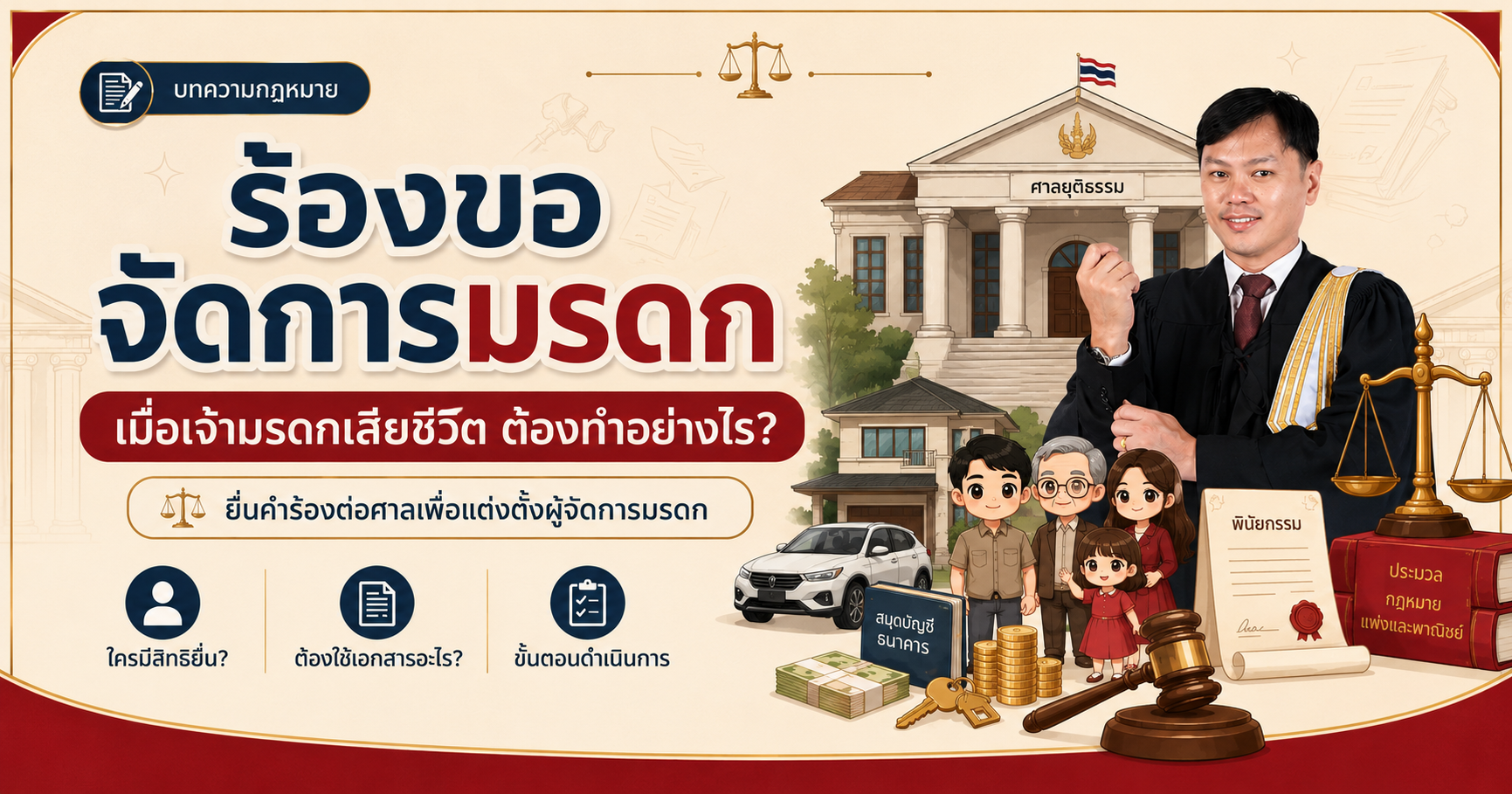
Applying for Estate Administration in Thailand
When a person passes away, certain assets, rights, duties, and liabilities of the deceased become part of the “estate,” which must be managed in accordance with the law. This may include withdrawing money from bank accounts, transferring land, managing vehicles, paying debts, or distributing the estate to the heirs.
In many cases, the heirs cannot immediately deal with the deceased’s assets because government agencies, banks, or other relevant parties often require a court order appointing an estate administrator to confirm who has the legal authority to manage the assets on behalf of the estate.
Therefore, filing a petition for estate administration is an important court process. It allows the court to issue an order appointing a suitable person as the estate administrator, giving that person the legal authority to deal with the deceased’s assets in accordance with the law.
What Is an Estate Administrator?
An estate administrator is a person appointed by a court order, or a person named in a will, to manage the estate of the deceased. Their duties may include collecting assets, examining debts, contacting government agencies, paying debts of the estate, and distributing the estate to the heirs or beneficiaries under the will.
Under Section 1719 of the Thai Civil and Commercial Code, an estate administrator has the rights and duties to perform necessary acts in order to carry out the will, manage the estate generally, or distribute the estate.
In simple terms, an estate administrator is not the owner of the entire estate. Rather, they are the person authorized to act on behalf of the estate as provided by law or by a court order.
Why Is It Necessary to File a Petition for Estate Administration?
Many families may understand that when the deceased passes away, the heirs can immediately divide the assets among themselves. However, in practice, if the assets are registered assets or are under the supervision of an authority, such as land, a house, a vehicle, bank deposits, shares, or assets with title documents, the relevant authorities often require a court order appointing an estate administrator first.
Filing a petition for estate administration therefore helps ensure that there is a clearly authorized person to manage the deceased’s assets. It also helps reduce disputes among heirs and ensures that the distribution of the estate is carried out in accordance with the law.
Example
A father passes away, leaving behind one house, one vehicle, and bank deposits. The heirs wish to transfer the house into the heirs’ names and withdraw money from the bank account to pay expenses. However, the bank and the land office require a court order appointing an estate administrator first.
In this case, the heirs should file a petition with the court to appoint an estate administrator so that the relevant assets can be properly managed.


Who Has the Right to Apply to Be Appointed as an Estate Administrator?
Under Section 1713 of the Thai Civil and Commercial Code, the persons who may file a petition with the court for the appointment of an estate administrator include heirs, interested persons, or the public prosecutor, where there is a legal necessity. Such circumstances may include cases where an heir or beneficiary under a will is missing, resides outside the Kingdom, is a minor, or where there is an obstacle to the management or distribution of the estate.
In general, the persons who commonly file such petitions include the following:
1. Statutory Heirs
Statutory heirs, such as a spouse, children, parents, siblings, or relatives who are entitled to inherit under the order prescribed by law, may file a petition with the court to be appointed as the estate administrator if there is a need to manage the deceased’s assets.
Example
A mother passes away, leaving bank accounts and land. Her child, who is a statutory heir, wishes to manage and transfer the estate assets. The child may file a petition requesting the court to appoint them as the estate administrator.
2. Beneficiaries under a Will
If the deceased made a will and specified that a certain person is to receive property, that person may have the right to file a petition to be appointed as the estate administrator or to request the court to proceed in accordance with the will.
Example
The deceased made a will leaving one plot of land to a grandchild. After the deceased passes away, the grandchild, as a beneficiary under the will, may file a petition with the court requesting the appointment of an estate administrator in order to transfer the land in accordance with the will.
3. A Person Appointed by the Deceased in a Will
If the will names a specific person as the estate administrator, that person may file a petition with the court requesting the court to appoint them as the estate administrator.
Example
The deceased made a will stating that their elder brother shall be the estate administrator. After the deceased passes away, the elder brother may submit the will as supporting evidence when filing a petition with the court to be appointed as the estate administrator.
4. Interested Persons in the Estate
An interested person, such as a person who has a right or interest connected with the estate, may file a petition in certain cases. This may include a person who may benefit from the estate or a person whose rights are connected with the deceased’s assets.
5. Creditors of the Estate in Certain Cases
If the estate has no estate administrator and it is necessary to manage the assets in order to pay debts, a creditor of the estate may be considered an interested person and may file a petition with the court. However, this must be considered based on the facts and evidence of each case.
Documents Required for Filing a Petition for Estate Administration
The documents required in an estate administration case may vary depending on the facts of each family. In general, the following documents should be prepared:
1. Death Certificate of the Deceased
This document confirms that the deceased has passed away and is an important document for initiating the court petition process.
2. Copies of Household Registration
Household registration documents are usually required for the deceased, the petitioner, and the heirs in order to show domicile, relationship, and other relevant case information.
3. Identification Card of the Petitioner
This is used to verify the identity of the person applying to be appointed as the estate administrator.
4. Documents Showing the Relationship with the Deceased
These may include birth certificates, marriage certificates, divorce certificates, name or surname change documents, or other documents showing that the petitioner is an heir or is connected with the deceased.
5. Will, If Any
If the deceased made a will, the will should be submitted together with the petition so that the court can consider the deceased’s intention and the person named in the will.
6. Documents Showing Estate Assets
These may include title deeds, bank account books, vehicle documents, life insurance policies, share certificates, business documents, or other evidence of assets.
7. Documents Relating to All Heirs
These may include copies of identification cards, household registrations, or letters of consent from the heirs if the heirs have agreed that a particular person should be appointed as the estate administrator.
The Court of Justice has previously published e-Filing guidelines for the public in estate administration cases, which refer to conditions suitable for uncontested cases, such as where all heirs consent to the petitioner being appointed as the estate administrator, or where the will specifies that the petitioner shall be the estate administrator.
However, the court may request additional documents depending on the facts of each case, such as name change certificates, documents certifying the death of the deceased’s parents, certificates issued by the district office, or additional documents showing estate assets.

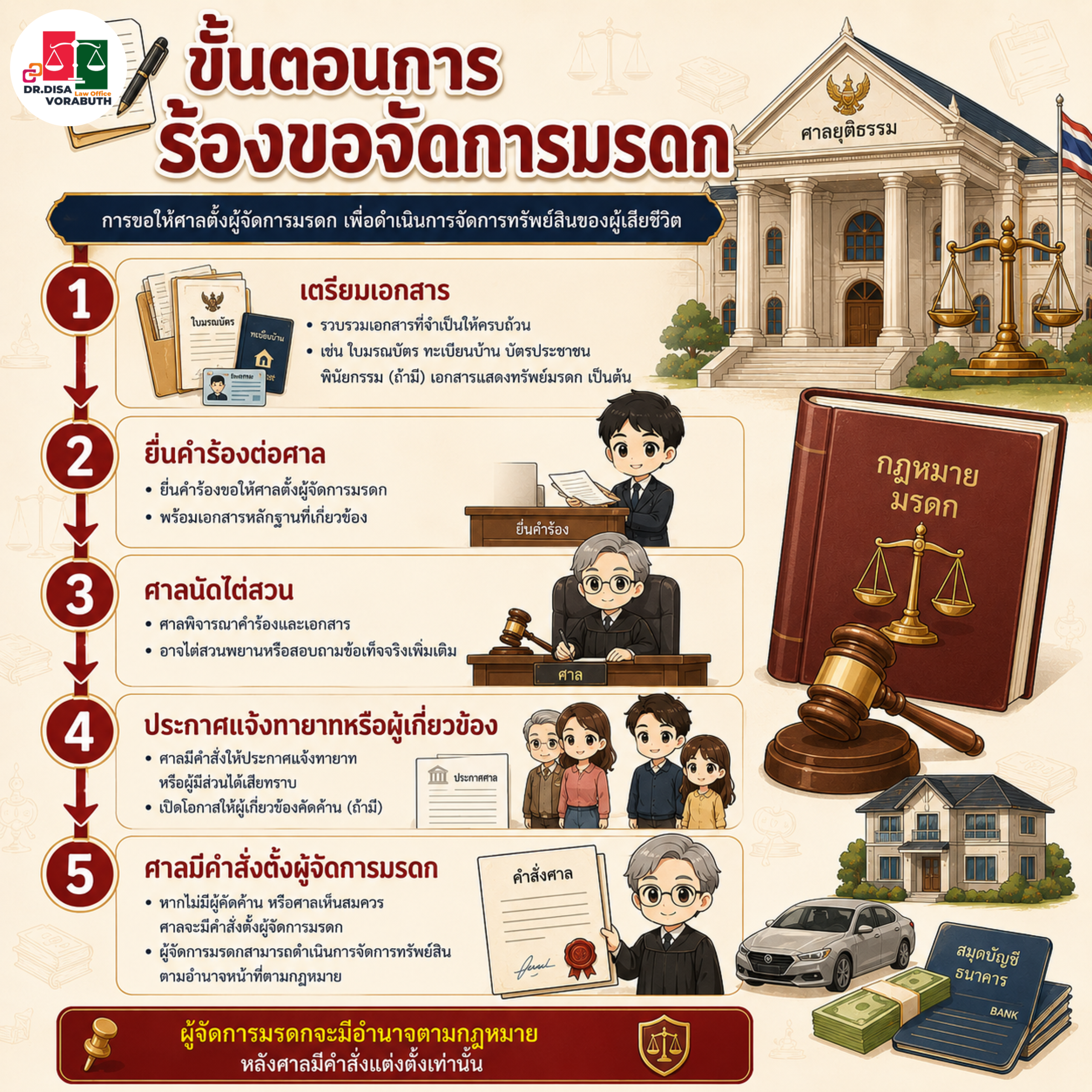
Steps for Filing a Petition for Estate Administration
1. Prepare Documents and Verify the Heirs
The process should begin by gathering all relevant documents relating to the deceased, the petitioner, the heirs, and the estate assets. It is also important to verify who the statutory heirs, beneficiaries under the will, or interested persons are.
2. Prepare the Petition for Estate Administration
The petition should include important information, such as who the deceased was, when the deceased passed away, how the petitioner is related to the deceased, how many heirs there are, what estate assets exist, why it is necessary to appoint an estate administrator, and why the petitioner is qualified and suitable to act as the estate administrator.
3. File the Petition with the Court Having Jurisdiction
The petitioner must file the petition with the court having jurisdiction, together with the supporting documents, and pay the required court fees in accordance with the procedure. In general, jurisdiction may be considered based on the domicile of the deceased or the location connected with the estate assets.
4. Court Hearing on the Petition
The court will schedule a hearing on the petition. The court may ask the petitioner about their relationship with the deceased, the list of estate assets, the heirs, and the necessity of appointing an estate administrator. If there is an objection, the court may need to consider the dispute further.
5. Notification to Heirs or Relevant Persons
In some cases, the court may order an announcement or notification to heirs and relevant persons in order to give interested persons an opportunity to object. If there is a dispute, such as an heir not giving consent, doubts about the will, or disagreement over who is suitable to be the estate administrator, the case may take longer.
6. Court Order Appointing the Estate Administrator
If the court finds that the petitioner has the right to apply, that there is a necessity, and that there is no legal obstacle, the court will issue an order appointing the petitioner as the estate administrator. After that, the estate administrator may use the court order to contact banks, the land office, the Department of Land Transport, or other relevant agencies to manage the estate assets.
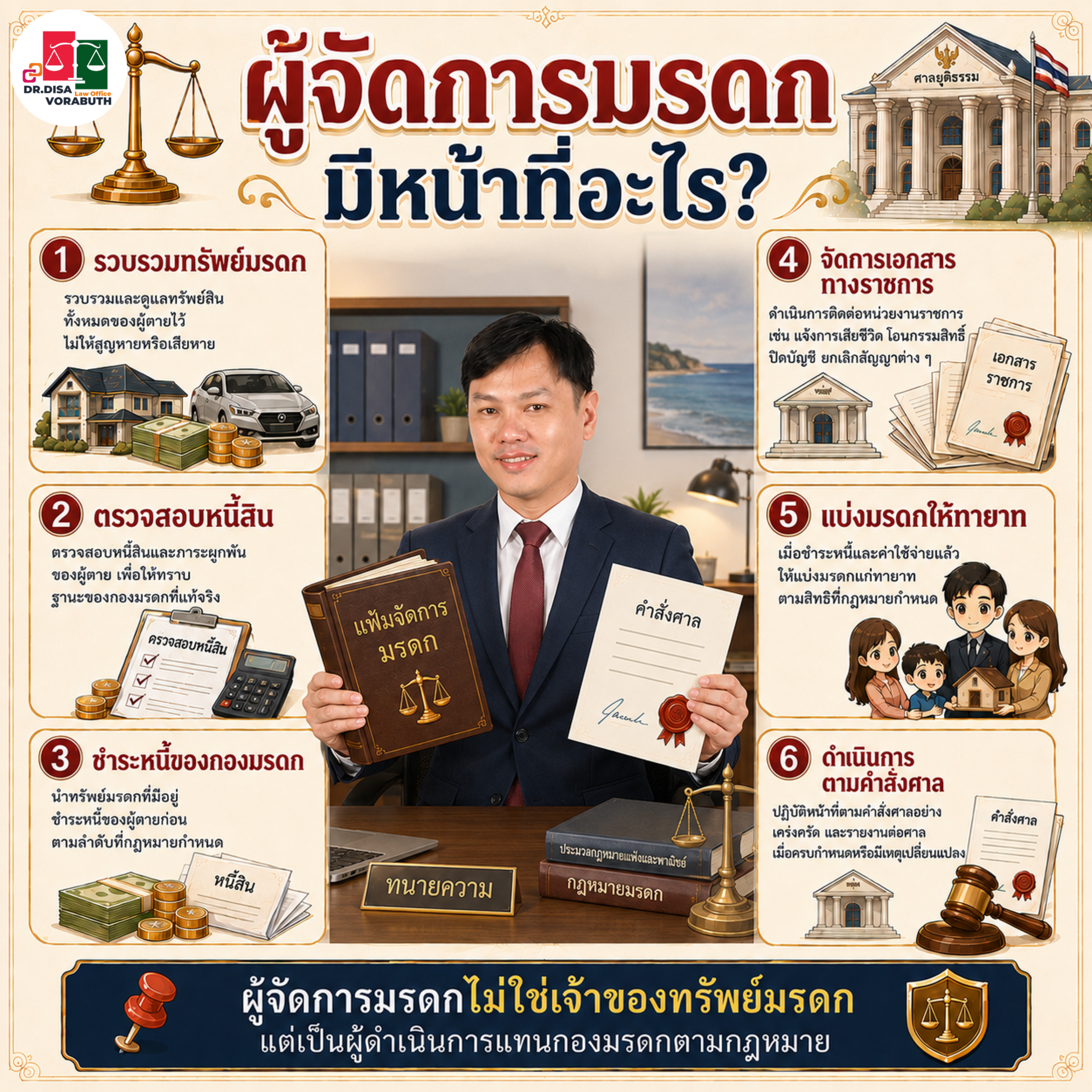
What Are the Duties of an Estate Administrator?
An estate administrator has the duty to act on behalf of the estate honestly, transparently, and for the benefit of all heirs or persons entitled to inherit. The key duties include the following:
1. Collecting Estate Assets
The estate administrator must collect and take care of all assets of the deceased, such as houses, land, vehicles, bank deposits, title documents, business assets, or other assets, in order to prevent them from being lost, damaged, or wrongfully transferred.
2. Examining Debts of the Estate
Before distributing the estate, the estate administrator should examine whether the deceased had any debts or obligations, such as bank debts, credit card debts, loan debts, tax liabilities, or expenses relating to the estate.
3. Paying Debts of the Estate in Accordance with the Law
If there are valid debts, the estate administrator must pay those debts from the estate assets first. The remaining assets may then be distributed to the heirs according to their rights.
4. Contacting Government and Private Agencies
The estate administrator may need to contact agencies such as the land office, banks, the Department of Land Transport, insurance companies, registrars, or other relevant organizations in order to transfer, close accounts, withdraw funds, or otherwise deal with the deceased’s assets.
5. Distributing the Estate to the Heirs
After collecting the assets, examining the debts, and paying the valid debts, the estate administrator must distribute the estate to the heirs or beneficiaries under the will in accordance with the law or the will.
6. Acting in Accordance with the Court Order
The estate administrator must act within the scope of authority granted by the court order and the law. They should not use the position for personal benefit or act in a way that unfairly disadvantages any heir.
Important Points about Estate Administrators
An Estate Administrator Is Not the Owner of the Estate
Even if the court appoints a person as the estate administrator, this does not mean that the person becomes the owner of all estate assets. The estate administrator has the duty to manage the estate and distribute the assets to the persons legally entitled to inherit.
Example
The court appoints the eldest child as the estate administrator of the father’s estate. The eldest child cannot sell the deceased’s house and keep all the money for themselves. They must manage the estate for the benefit of all heirs in accordance with the law.
Debts of the Estate Must Be Paid Before Distribution
If the deceased had debts, the estate administrator should pay valid debts before distributing the assets. If the estate is distributed too quickly without checking the debts, problems may arise later.
The Estate Must Be Distributed in Accordance with the Law or the Will
If there is a will, it must be considered whether the will is valid and how it directs the distribution of the assets. If there is no will, the estate must be distributed according to the order of statutory heirs and the proportions prescribed by law.
Concealing or Misappropriating Estate Assets May Lead to Liability
If an estate administrator conceals, transfers, destroys, or sells estate assets unlawfully, the heirs or interested persons may take legal action. The estate administrator may be held liable under civil or criminal law, depending on the facts of the case.

Examples of Situations Where an Estate Administration Petition May Be Required
Example 1: The Deceased Had Bank Accounts, but No Authorized Person to Withdraw the Money
A father passes away, leaving three bank accounts. The heirs wish to withdraw the money to pay expenses and distribute it among the heirs. However, the bank informs them that a court order appointing an estate administrator is required first.
In this case, the child may file a petition with the court to be appointed as the estate administrator.
Example 2: The Deceased Had Land and Several Heirs
A mother passes away, leaving two plots of land and four children. All of the children agree that the eldest child should handle the documents and related procedures.
The eldest child may file a petition with the court to be appointed as the estate administrator, together with the required documents and consent letters from the other heirs, in order to proceed with the transfer or distribution of the estate assets.
Filing a petition for estate administration is the process of submitting a petition to the court requesting the appointment of a suitable person as the estate administrator after the deceased has passed away. The estate administrator is responsible for collecting assets, examining debts, paying debts, contacting relevant authorities, and distributing the estate to the heirs or beneficiaries under the will in accordance with the law.
Persons who have the right to file such a petition include heirs, beneficiaries under a will, interested persons, or the public prosecutor in cases prescribed by law. Having a court order appointing an estate administrator helps ensure that the deceased’s assets are managed systematically and lawfully, while also reducing disputes among heirs.
However, an estate administrator is not the owner of the estate. Rather, they act on behalf of the estate and must manage the assets honestly, transparently, and fairly. If there is a dispute or if the estate includes several assets, it is advisable to consult a lawyer to ensure that the process is carried out correctly in accordance with the law.
 Tel : 062-652-4259 (Attorney Dr. Ning)
 LINE ID : @disavorabuthlaw
 For more information, please follow us on
ด้วยประสบการณ์ด้านกฎหมายที่สั่งสมมาตั้งแต่ปี พ.ศ. 2555 เราคือผู้เชี่ยวชาญที่คุณวางใจได้ในทุกปัญหาทางกฎหมาย ไม่ว่าจะเป็น กฎหมายแพ่งและพาณิชย์ ที่ครอบคลุมสัญญาต่างๆ การฟ้องร้อง และการดำเนินคดี หรือกฎหมายแรงงาน ที่ช่วยให้ธุรกิจของคุณหลีกเลี่ยงข้อพิพาท นอกจากนี้ เรายังเชี่ยวชาญใน กฎหมายครอบครัว กฎหมายมรดก กฎหมายคุ้มครองผู้บริโภค กฎหมายทรัพย์สินทางปัญญา กฎหมายอาญา และกฎหมายอื่นๆ นอกจากนี้ เรายังให้บริการให้คำปรึกษากฎหมายและบริการจดทะเบียนที่ครอบคลุมครบวงจรทั้งในกรุงเทพฯ และนครราชสีมา
ด้วยประสบการณ์ด้านกฎหมายที่สั่งสมมาตั้งแต่ปี พ.ศ. 2555 เราคือผู้เชี่ยวชาญที่คุณวางใจได้ในทุกปัญหาทางกฎหมาย ไม่ว่าจะเป็น กฎหมายแพ่งและพาณิชย์ ที่ครอบคลุมสัญญาต่างๆ การฟ้องร้อง และการดำเนินคดี หรือกฎหมายแรงงาน ที่ช่วยให้ธุรกิจของคุณหลีกเลี่ยงข้อพิพาท นอกจากนี้ เรายังเชี่ยวชาญใน กฎหมายครอบครัว กฎหมายมรดก กฎหมายคุ้มครองผู้บริโภค กฎหมายทรัพย์สินทางปัญญา กฎหมายอาญา และกฎหมายอื่นๆ นอกจากนี้ เรายังให้บริการให้คำปรึกษากฎหมายและบริการจดทะเบียนที่ครอบคลุมครบวงจรทั้งในกรุงเทพฯ และนครราชสีมา